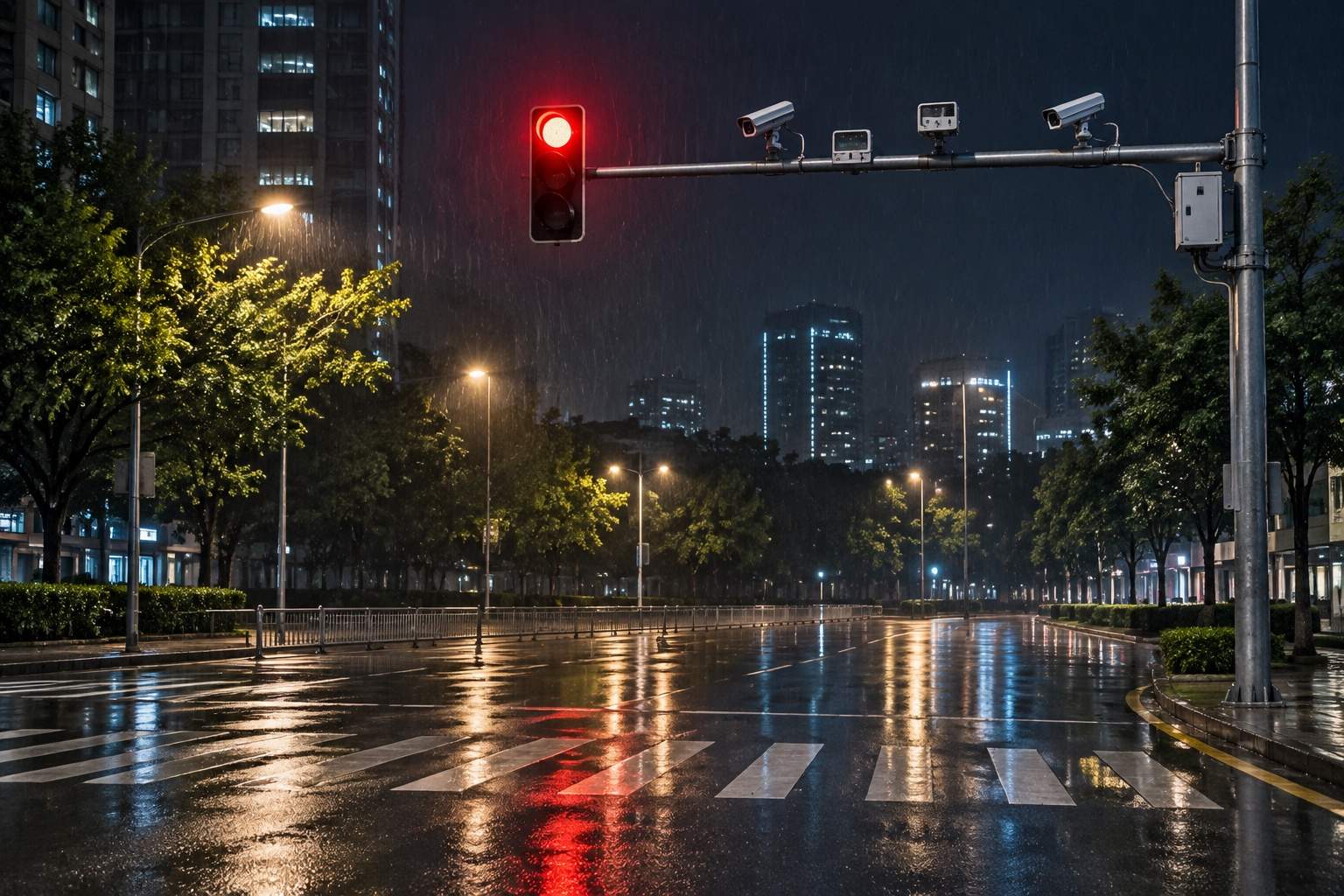
That high-efficiency LED glow illuminating your path home isn't just saving the city money on its utility bill; it is functioning as a precision-guided sensor node in a vast, urban dragnet. While municipal press releases celebrate the "Smart City" as a pinnacle of safety and sustainability, the technical reality is the deployment of a massive, decentralized tracking infrastructure. These streetlights are increasingly equipped with "Small Cell" antennas and Wi-Fi sniffers that silently log the unique MAC address of every smartphone within a 50-meter radius. You aren't just a pedestrian on a public sidewalk; you are a moving MAC address being "handed off" from one pole to the next, creating a permanent, searchable record of your physical movements through the city.
E.g. :Your Smart Toaster is Lobbying for Your Electricity Bill to Go Up
- 1、The Exploitation of Bluetooth and Wi-Fi Sniffing in Urban Infrastructure
- 2、Engineering the "Safe City" via Automated Facial Recognition and Audio Analytics
- 3、The Digital Shackles of the "15-Minute City" Management
- 4、Reclaiming Digital Sovereignty in the Urban Grid
- 5、The High Cost of the "Connected" Sidewalk
The Exploitation of Bluetooth and Wi-Fi Sniffing in Urban Infrastructure
The architecture of the smart city relies on the fact that your smartphone is constantly screaming its identity into the void to find a connection. Smart streetlights utilize "Probe Request" sniffing to capture these signals, even if you never actually join a public Wi-Fi network. By deploying these sensors at every intersection, city planners and their private-sector partners can generate "Heat Maps" of human traffic that are terrifyingly granular. This isn't just about managing congestion; it is about the "Passive Enrollment" of every citizen into a tracking system without their explicit consent. When the city knows you visit a specific clinic, a political headquarters, or a bar every Friday night, the concept of "public anonymity" effectively dies.
The Handover Logic of Urban IoT
As you move, the RSSI (Received Signal Strength Indicator) of your phone shifts between different light poles. Algorithms use this triangulation to calculate your walking speed and direction with sub-meter accuracy. This creates a digital breadcrumb trail that can be retroactively analyzed to reconstruct your entire day's itinerary.
Engineering the "Safe City" via Automated Facial Recognition and Audio Analytics
Beneath the glass of these "smart nodes" often sits a high-resolution camera and a directional microphone array, marketed as tools for "Emergency Response" and "Acoustic Shot Detection." However, the software layer frequently includes edge-processing AI capable of gait analysis and facial recognition. This transforms the humble streetlight into a forensic tool that can identify individuals even if their faces are obscured, simply by the way they move. By integrating these nodes with a centralized "Real-Time Crime Center," the city grants itself the power of a digital panopticon where the "expectation of privacy" in public is replaced by a state of constant, automated suspicion.
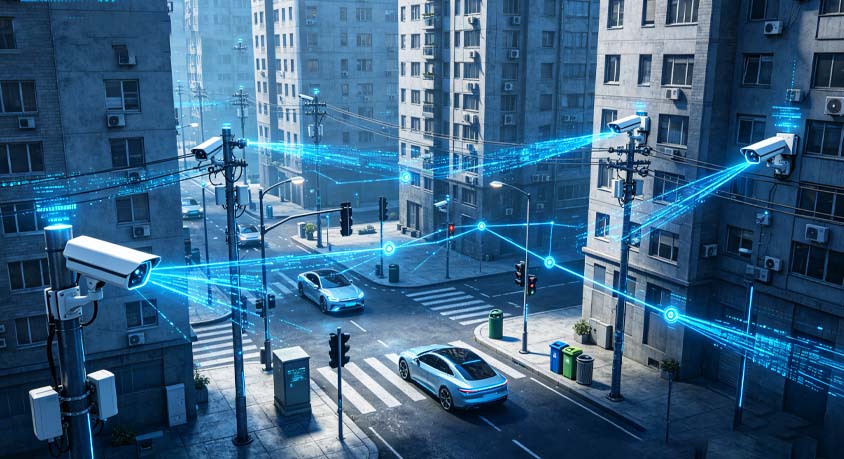
The Risk of Acoustic Surveillance
Modern audio sensors are tuned to "keywords" or "stress frequencies," supposedly to detect glass breaking or shouting. In practice, this means the infrastructure is "always listening," and the line between public safety and eavesdropping on private street conversations is governed only by a software setting that you can't audit.
The Digital Shackles of the "15-Minute City" Management
The push for "Efficient Urbanism" is increasingly tied to a "Social Credit" style of management where access to certain zones or services is dictated by your movement data. Smart streetlights provide the enforcement layer for this transition. If a city implements dynamic congestion pricing for pedestrians or restricts access during "emergencies," the IoT grid is what verifies your compliance. We are moving toward a future where the "Smart" infrastructure can effectively "lock" a neighborhood by disabling services or flagging unauthorized presence in real-time. The infrastructure doesn't just watch the city; it manages the behavior of the people within it.
Reclaiming Digital Sovereignty in the Urban Grid
Surviving the smart city as a digital pragmatist requires understanding that your "visibility" is a toggle switch on your device. The most effective defense against urban sniffing is the rigorous use of "MAC Randomization" and keeping your Wi-Fi and Bluetooth radios turned off when not in use. Beyond personal settings, we must demand "Hardware Transparency" from local governments—insisting that every sensor node carry a physical label detailing what data it collects and where that data is stored. If a streetlight has a microphone, the public has a right to know who is listening and why.
The Strategy of Signal Obfuscation
For those in high-surveillance zones, using a Faraday bag for your phone or a hardware-based signal blocker is the only way to ensure total "digital invisibility." In the eyes of the smart city, if you don't have a broadcasting MAC address, you don't exist—and in 2026, non-existence is the ultimate form of privacy.
The High Cost of the "Connected" Sidewalk
The convenience of municipal Wi-Fi and the promise of safer streets are the carrots used to lead us into a total-surveillance state. We must recognize that every "smart" upgrade to our public infrastructure is a permanent expansion of the state's eyes and ears. The city should be a place of spontaneous interaction and hidden corners, not a hyper-optimized laboratory where every step is a data point for a bureaucrat's dashboard.
The streetlights are watching, but they only see what you allow your devices to broadcast; choose your signals wisely.