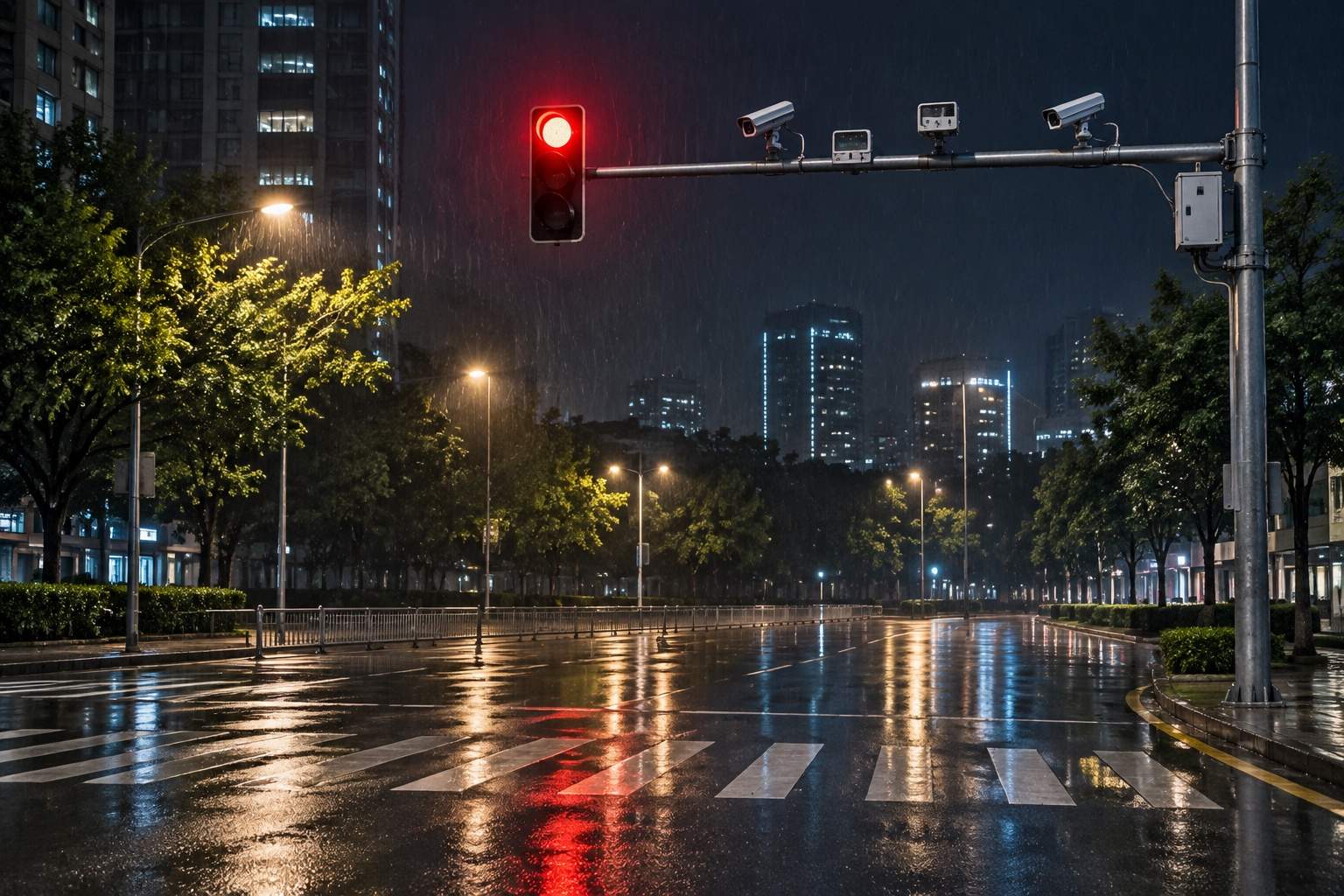
You sit at a deserted intersection at 1:00 AM, watching a red light timer tick down 120 seconds. Not a single car passes. No pedestrians step off the curb. Yet, a multi-million-dollar AI traffic system forces you to idle, burning fuel for phantom traffic that does not exist.
E.g. :The Router Reboot Trap: Why Your Wi-Fi Signal Needs a Smarter Fix
- 1、The Two-Minute Red Light at an Empty Midnight Intersection
- 2、How Smart Signals Are Built to Prioritize System Metrics Over Drivers
- 3、Why Adaptive Signal Control Algorithms Fail in Complex Urban Traffic
- 4、Fragmented IoT Infrastructure Ruins Modern Traffic Flow Optimization
- 5、The Path Forward for Genuine Intelligent Transportation Systems
Cities worldwide have poured billions into intelligent transportation systems under the promise of frictionless commutes. The reality on the road is starkly different: average travel speeds in major urban centers have decreased over the last decade, and drivers face more unpredictable signal halts than ever before.
The Two-Minute Red Light at an Empty Midnight Intersection
Smart signals were pitched as the ultimate fix for urban congestion, engineered to dynamically adjust green lights based on real-time vehicle demand. In theory, adaptive signal control saves time, cuts carbon emissions, and maximizes road capacity without laying a single new strip of asphalt.
The technology relies on a dense network of IoT sensors including underground inductive loops, overhead radar, and computer vision cameras feeding traffic density data into localized controllers or cloud servers. The system calculates optimal signal phases continuously to keep traffic moving.
How Smart Signals Are Built to Prioritize System Metrics Over Drivers
The core friction lies in what these algorithms are actually optimized to achieve. Most urban traffic management systems do not prioritize individual driver speed; they optimize for network-wide safety thresholds, pedestrian clearance buffers, and bus rapid transit overrides.
When a smart system detects a single transit bus three blocks away, it locks main arterial routes to clear a corridor, triggering artificial cascades of red lights for surrounding vehicles. What drivers experience as a dumb light is often an algorithm sacrificing minor roads to prevent downstream gridlock miles away.
Edge Sensors and the Reality of Flawed Traffic Data Collection
Bad data creates bad signal timing. Inexpensive camera sensors frequently miss vehicles under heavy rain, direct sunlight glare, or fog, reverting the smart controller back to rigid, pre-programmed fail-safe cycles.
Inductive loops embedded in pavement degrade rapidly under heavy truck traffic. Once a sensor fails, the edge gateway loses visibility, defaulting the entire intersection to max-timer cycles that trap drivers at empty roads.
Why Adaptive Signal Control Algorithms Fail in Complex Urban Traffic
Traffic dynamics are non-linear. Machine learning models trained on historical flow patterns struggle when erratic human behavior, sudden delivery drop-offs, or illegal street parking disrupt predicted throughput.
The Blind Spots of Machine Learning in Real Time Signal Timing
Most traffic optimization algorithms operate on predictive models rather than immediate reactive feedback. By the time an edge processor calculates a new phase adjustment, the localized traffic burst has already shifted, causing the system to fix problems that no longer exist.
Fragmented IoT Infrastructure Ruins Modern Traffic Flow Optimization
Municipalities rarely build smart traffic networks from scratch. Instead, legacy infrastructure from a dozen different vendors is retrofitted with third-party IoT sensors, creating massive integration bottlenecks.
A signal controller running proprietary software from twenty years ago cannot process high-frequency sensor payloads from modern camera arrays. The result is latency, where real-time traffic data takes tens of seconds to trigger a signal change, completely invalidating the concept of real-time control.
The Path Forward for Genuine Intelligent Transportation Systems
Fixing urban traffic requires moving away from isolated algorithms and focusing on resilient edge infrastructure. True smart signals demand reliable multi-modal sensing, standardized open protocols, and algorithms designed to solve actual traffic bottlenecks rather than meeting vendor sales targets.