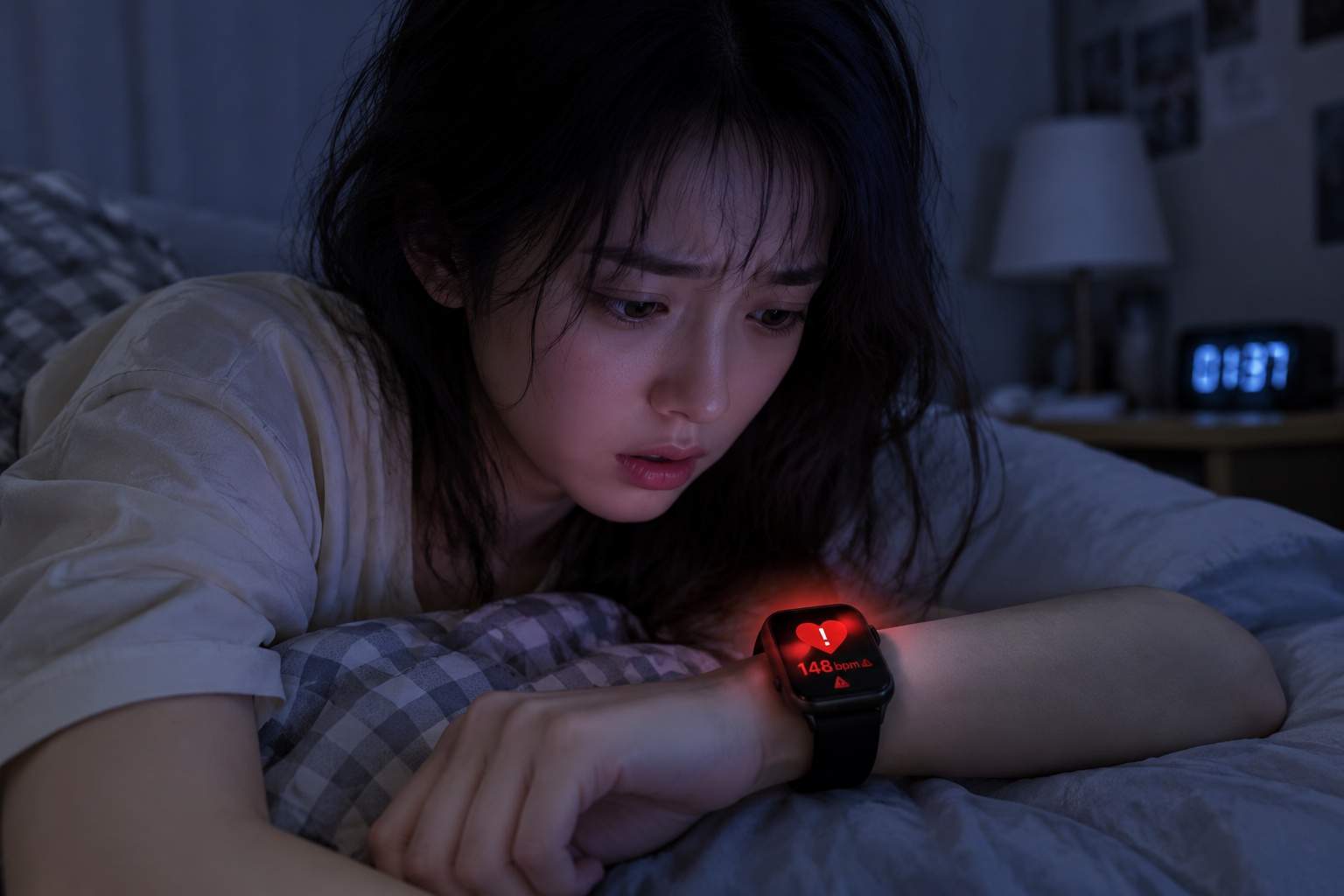
At 3:14 AM, the optical sensor on your wrist flashes green, vibrating violently against your skin. The display flashes an ominous resting heart rate spike of 138 beats per minute. Adrenaline dumps into your bloodstream, your chest constricts from acute terror, and by 4:30 AM you are sitting under hospital fluorescent lights waiting for triage. The subsequent 12-lead ECG reveals an unremarkable sinus rhythm at 68 beats per minute. Your cardiovascular system was completely stable until an algorithm convinced you it was failing.
E.g. :Smart Home's Silent Watch: Your Data, The Real Price of Convenience
- 1、The Optical PPG Sensor Flaw Behind Midnight Cardiac Alerts
- 2、Why IoT Wearable Algorithms Prioritize False Positives Over Accuracy
- 3、Edge Computing Constraints On Continuous Biometric Filtering
- 4、The Real Medical Cost Of Smart Watch Data Hallucinations
- 5、Digital Hypochondria And The Clinical Validation Gap
- 6、Context Blindness In Consumer Wearable Health Architecture
- 7、Redesigning Smart Health Wearables For True Clinical Utility
Consumer tech hardware brands sell biometric surveillance under the banner of proactive healthcare. The commercial objective requires non-stop user engagement, converting benign autonomic fluctuations into urgent diagnostic notifications. The underlying detection hardware—photoplethysmography (PPG)—relies on optical reflections inherently compromised by mundane arm positions, local pressure, and peripheral blood flow variations.
The Optical PPG Sensor Flaw Behind Midnight Cardiac Alerts
PPG sensors estimate arterial blood volume changes by emitting light into cutaneous vascular beds and measuring backscatter. When an individual sleeps, resting an arm beneath a pillow mechanically compresses local capillaries, reducing local blood volume.
The sensor photodiode perceives this artificial drop in signal amplitude as erratic arterial perfusion. Consumer optical sensors lack the signal-to-noise ratio required to distinguish between vascular compression and genuine ventricular distress, yet consumer alert engines run at high gain to ensure no pulse wave goes unrecorded.
Why IoT Wearable Algorithms Prioritize False Positives Over Accuracy
Firmware running on commercial wearables operates under defensive engineering logic. In liability terms, a missed arrhythmia risks catastrophic product headlines, whereas a midnight panic attack is dismissed as an over-cautious user error.
Device algorithms are intentionally calibrated toward hyper-sensitivity. Engineering teams set detection thresholds to capture edge-case ventricular anomalies, knowingly converting benign sleep-stage tachycardia, ambient room chills, and wrist slippage into red-level cardiac alerts.
Edge Computing Constraints On Continuous Biometric Filtering
Smartwatch microcontrollers operate under strict milliwatt power budgets to maintain multi-day battery runtimes. Running heavy digital signal processing or real-time artifact filtration pipelines overnight drains small lithium-polymer cells rapidly.
To preserve power, edge firmware suspends complex motion-artifact verification during passive monitoring periods. Raw, corrupted pulse measurements bypass contextual validation pipelines and head directly into threshold alert triggers.
The Real Medical Cost Of Smart Watch Data Hallucinations
Emergency facilities face continuous waves of asymptomatic patients holding wrist-worn telemetry graphs. Clinicians find themselves trapped ordering defensive diagnostic protocols—Holter monitors, serial troponin panels, and echocardiograms—simply to invalidate the outputs of an unregulated optical tracker.
The dynamic introduces severe clinical inefficiencies while damaging patient health. The panic generated by an initial false alarm triggers genuine sympathetic arousal, driving real tachycardia and blood pressure spikes that reinforce the hardware's flawed telemetry.
Digital Hypochondria And The Clinical Validation Gap
Wearable manufacturers frequently cite regulatory clearance to project diagnostic reliability. Most consumer devices hold FDA 510(k) clearance for general wellness notification, which requires demonstrating substantial equivalence to pre-existing consumer devices, not clinical diagnostic equivalence.
Untrained users lack the clinical foundation to contextualize raw heart rate variability or normal sinus arrhythmia. Unfiltered biometric feeds transform ordinary variations into persistent physical dread, converting healthy consumers into obsessive biometrics trackers.
Context Blindness In Consumer Wearable Health Architecture
A hospital telemetry unit functions inside a controlled ecosystem reinforced by multiple leads, blood oxygen sensors, and immediate clinical oversight. A wrist wearable operates in complete physical and contextual isolation.
The device cannot differentiate between a REM-induced nightmare, late-night digestion, mild dehydration, and acute cardiac dysfunction. Operating without concurrent multi-sensor validation, raw pulse spikes remain clinically unanchored numbers masquerading as diagnostic insight.
Redesigning Smart Health Wearables For True Clinical Utility
Consumer IoT must end the practice of broadcasting raw, unvetted biometric alerts to anxiety-prone consumers. Device architecture must adopt tiered alert structures that suppress warnings until secondary biometrics confirm physiological instability. Until multi-wavelength sensors and contextual clinical filters become the standard, wrist-worn cardiac alerts should be treated as noisy software estimates rather than medical truth.