You open the refrigerator and see three half-empty containers, an expired yogurt and a carton of milk you forgot you bought.
E.g. :Your Smart Vending Machine is Scanning Your Face Before Releasing Your Soda
- 1、Smart Refrigerator Technology Targets a Real Household Problem
- 2、Food Tracking Is Harder Than It Looks
- 3、Smart Kitchen Displays Can Solve a Different Problem
- 4、Temperature Monitoring Is One of the More Practical Features
- 5、Smart Appliances Still Have a Cost Problem
- 6、IoT Can Reduce Waste Only When People Use the Information
Now imagine the refrigerator already knows.
Connected refrigerators can track temperatures, send alerts, manage inventory and, on some models, use cameras or other sensors to identify food stored inside.
The pitch sounds convincing: better information should mean less wasted food.
But there is a catch. Knowing what is inside the refrigerator does not necessarily mean a household will actually use it.
Smart Refrigerator Technology Targets a Real Household Problem
Food waste is not simply a grocery-shopping problem.
People forget what they already have, buy duplicate products and miss expiration dates.
A connected refrigerator can provide information at the moment it becomes useful.
Instead of discovering spoiled food at the back of a shelf, homeowners can receive reminders or check inventory remotely.
The potential benefit is less unnecessary purchasing and better household planning.
A Refrigerator Can Become an Inventory System
Traditional refrigerators are essentially passive storage.
Smart refrigerators can add sensors, cameras, displays and network connectivity.
Depending on the model, these systems can monitor temperature, provide alerts and help users identify stored food.
The technology turns an appliance into a source of household information.
Food Tracking Is Harder Than It Looks
Identifying food sounds easy until real kitchens get involved.
A carton can be moved. A container can block another product. Leftovers may not have labels. Food can be removed from its original packaging.
Even cameras cannot automatically understand every detail of a messy refrigerator.
That means smart inventory systems work best when the technology is supported by predictable household habits.
The Messy Fridge Problem
A demonstration refrigerator can be perfectly organized.
A real family refrigerator usually is not.
Containers overlap. Shelves become crowded. People put things wherever there is space.
This is an important limitation for IoT kitchen technology: the physical environment remains unpredictable even when the software is sophisticated.
Smart Kitchen Displays Can Solve a Different Problem
Not every useful feature requires the refrigerator to identify every item.
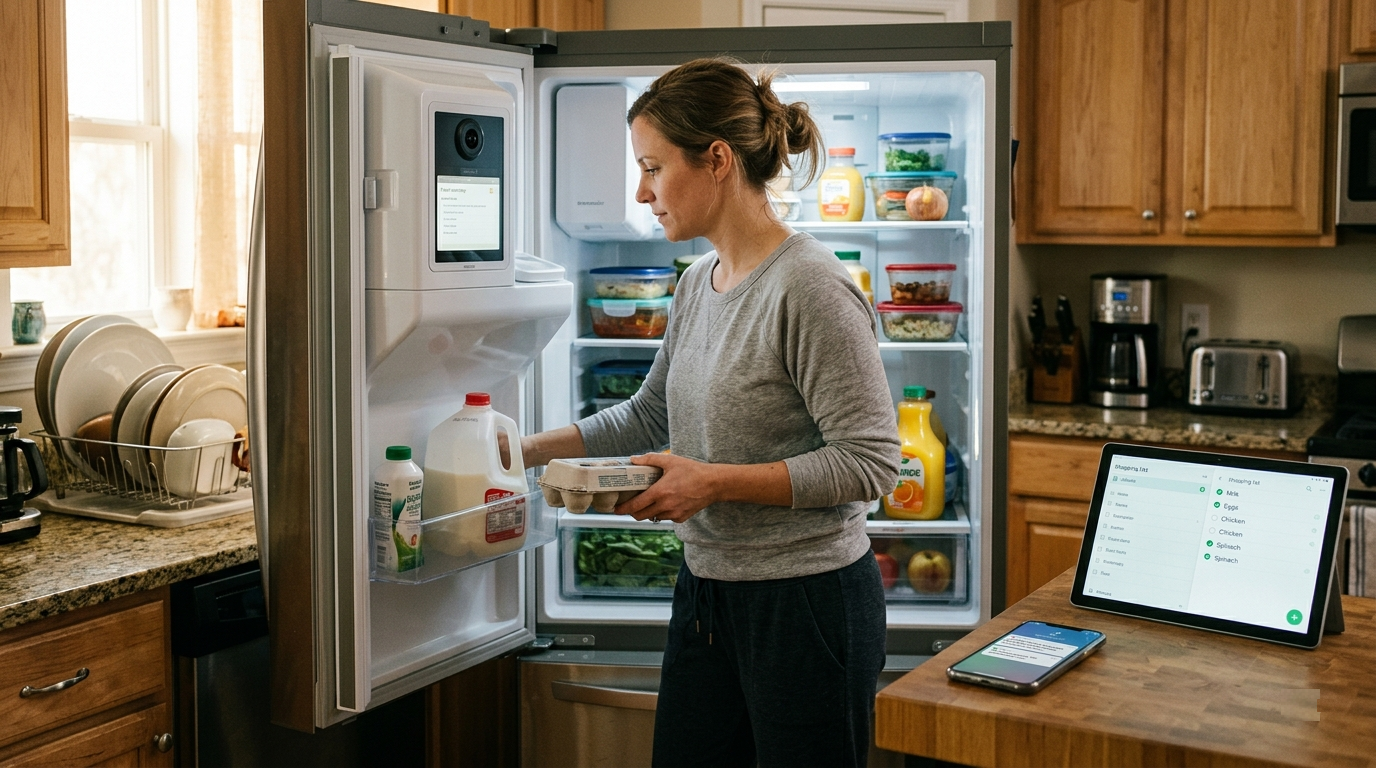
A connected kitchen display can provide shared shopping lists, meal information, calendars and reminders.
That may sound less impressive than AI-powered food recognition.
But it can solve a more common problem: family members forgetting what needs to be purchased.
Shared Information Can Beat More Automation
Imagine one person notices that the eggs are almost gone.
Instead of sending a text message or hoping someone remembers, they can add the item to a shared list.
The technology does not need to “understand” the entire kitchen.
It simply needs to make coordination easier.
Temperature Monitoring Is One of the More Practical Features
Food inventory is complicated.
Temperature monitoring is much more straightforward.
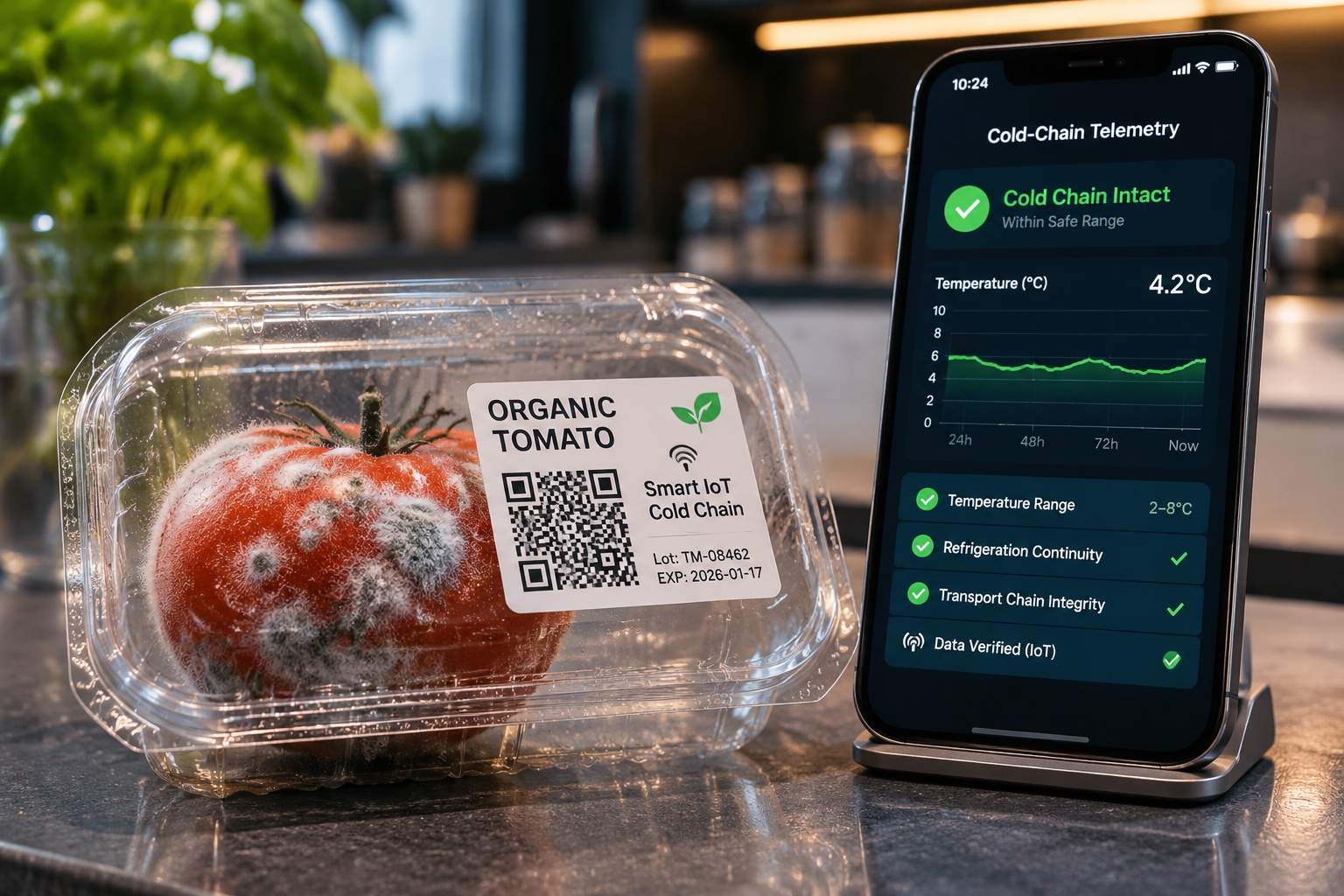
A connected refrigerator can alert users when temperatures move outside an expected range or when the door remains open for too long, depending on the product.
That information can be useful because a refrigerator problem may not be obvious until food quality has already been affected.
IoT works particularly well here because the sensor is measuring a physical condition that is difficult for humans to monitor continuously.
Smart Appliances Still Have a Cost Problem
A connected refrigerator can be significantly more expensive than a conventional model.
That raises a basic consumer question: which features actually justify the additional cost?
A temperature alert may provide practical value.
A large touchscreen may be convenient.
Automatic food recognition may be impressive.
But consumers should separate features that solve recurring problems from features that simply make an appliance look more technologically advanced.
More Technology Means More Things to Maintain
Connected appliances require software, network connectivity and manufacturer support.
That creates another consideration that rarely appears in showroom demonstrations.
What happens when the app changes? What happens when cloud services are discontinued? What happens when a software feature stops working while the refrigerator itself remains perfectly functional?
The appliance may last much longer than its connected ecosystem.
IoT Can Reduce Waste Only When People Use the Information
A smart refrigerator cannot stop someone from forgetting leftovers.
It cannot force a family to check the shopping list.
It cannot turn an untouched vegetable drawer into dinner.
What it can do is reduce the information gap between what a household owns and what the household remembers owning.
That is where smart kitchen technology has genuine potential.
The best connected appliance is not the one with the longest feature list. It is the one that quietly prevents a recurring household problem.