You leave home for a week during a hot summer.
E.g. :Digital Well-being: A Mandate, Or Just Algorithmic Addiction in Disguise?
- 1、Smart Irrigation Uses IoT to Control Water More Precisely
- 2、Smart Garden Technology Still Has a Coverage Problem
- 3、Weather Data Can Prevent Unnecessary Watering
- 4、Smart Irrigation Sensors Are Not Maintenance-Free
- 5、Smart Irrigation Can Also Protect the Garden From Overwatering
- 6、The Smartest Garden Is Not Fully Automated
Before leaving, you set the smart irrigation system to water the garden automatically.
When you return, one section of the yard looks healthy while another is strangely dry. Somewhere else, water has pooled around a planter.
The system followed its schedule.
The garden still did not get exactly what it needed.
That exposes a basic weakness in smart gardening: plants do not all have the same water requirements, even when they share the same yard.
Smart Irrigation Uses IoT to Control Water More Precisely
Traditional garden watering often follows a simple schedule.
Turn the sprinkler on at a certain time, run it for a certain number of minutes and repeat.
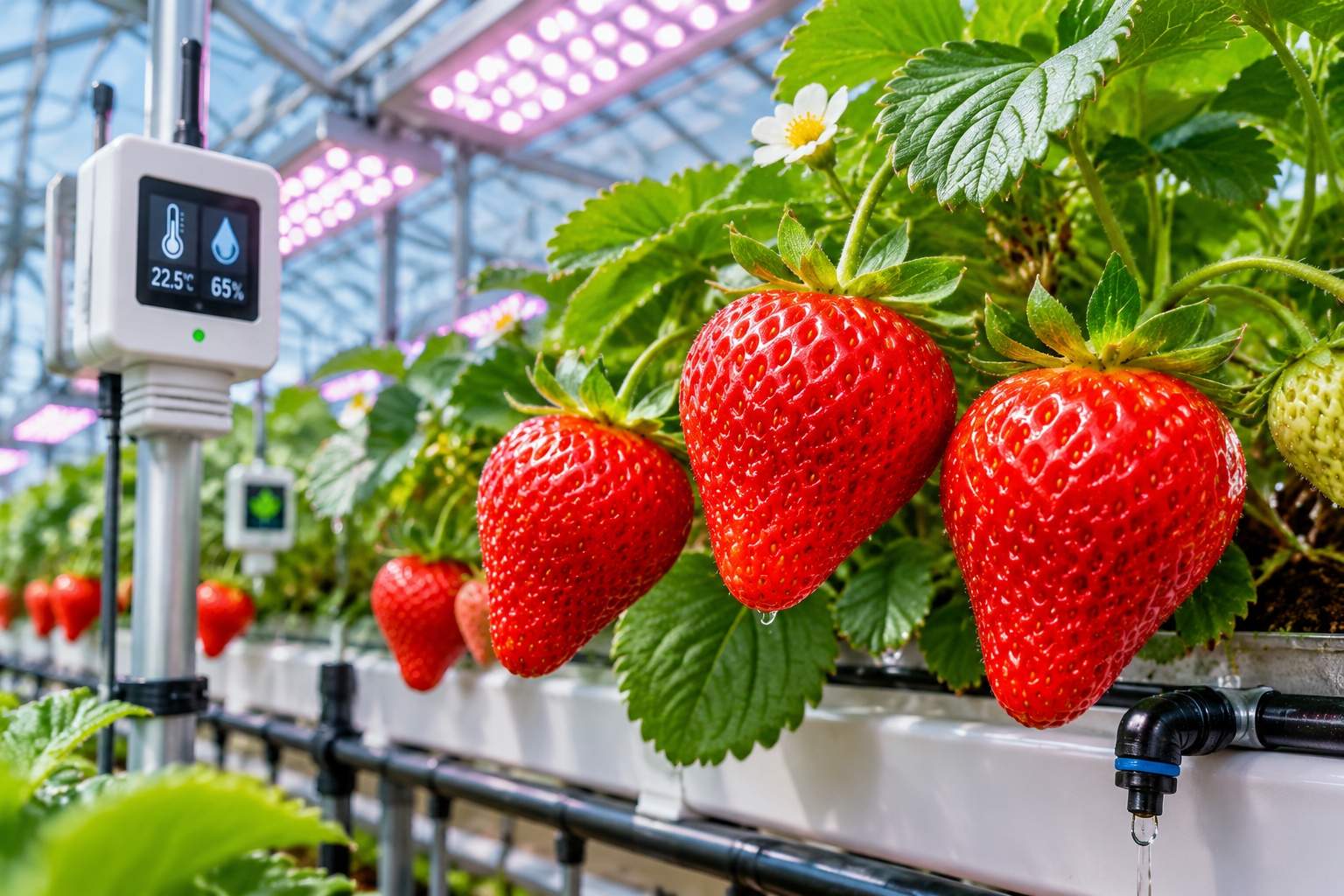
Smart irrigation controllers can add information from weather services, soil moisture sensors and local conditions to adjust watering.
The goal is not simply automation.
It is to avoid watering when the garden does not need it and provide water when conditions actually require it.
That can reduce unnecessary water use while keeping plants healthier.
Soil Moisture Sensors Add Information Humans Cannot See
A garden can look dry on the surface while moisture remains deeper in the soil.
A soil moisture sensor provides a measurement that visual inspection cannot easily provide.
The controller can then use that information when deciding whether irrigation is necessary.
This is one of the strongest IoT applications in gardening because the sensor measures an actual physical condition rather than trying to guess what the homeowner wants.
Smart Garden Technology Still Has a Coverage Problem
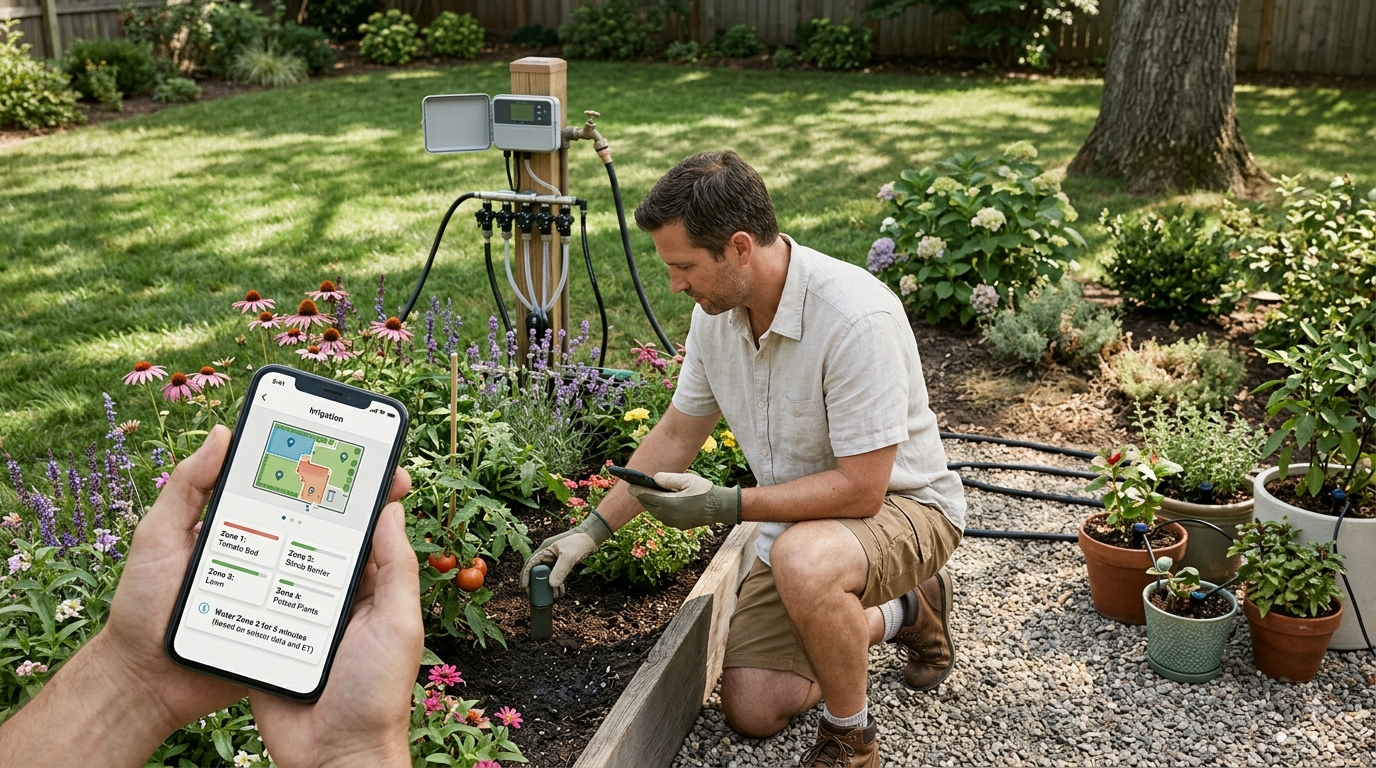
A single yard can contain grass, flowers, shrubs and potted plants.
They may receive different amounts of sunlight and have completely different water requirements.
Treating the entire garden as one zone can therefore create inefficient watering.
Smart irrigation works better when the system divides the landscape into zones based on plant type, soil and exposure.
One Schedule Cannot Fit Every Plant
A shaded flower bed may need less water than a sunny lawn.
A container plant can dry out much faster than a mature shrub.
This is why a sophisticated controller cannot compensate for poor irrigation design.
The sensors and software can improve decisions, but the physical layout still matters.
Weather Data Can Prevent Unnecessary Watering
One of the simplest benefits of connected irrigation is weather awareness.
If rain is expected, an irrigation controller can potentially delay a scheduled cycle.
That sounds obvious, but conventional timers may continue running because they only know the time.
Connecting the irrigation system to weather information changes the decision from “Is it 6 a.m.?” to “Does this garden actually need water?”
Automation Can Save Water Without Extra Effort
This is where IoT has a genuine household advantage.
People forget.
They travel.
They get busy.
A connected system can continue making routine adjustments without requiring the homeowner to remember every watering cycle.
But automation still needs sensible settings.
A poorly configured smart controller can automate waste just as efficiently as it automates conservation.
Smart Irrigation Sensors Are Not Maintenance-Free
Outdoor sensors face harsh conditions.
Soil composition changes. Sensors can shift position. Batteries eventually need replacement. Wireless connections can fail.
A sensor that stops reporting accurate data can influence every watering decision connected to it.
That means smart irrigation requires occasional physical inspection even when the software claims everything is operating normally.
More Sensors Do Not Automatically Mean Better Results
Adding sensors everywhere sounds sophisticated.
But the useful question is whether each sensor changes a meaningful decision.
A well-positioned soil sensor in an important irrigation zone may provide more value than several poorly placed sensors producing data nobody uses.
The objective is better decisions, not a larger dashboard.
Smart Irrigation Can Also Protect the Garden From Overwatering
Too much water can be just as problematic as too little.
Excessive irrigation can contribute to runoff, water waste and unhealthy growing conditions depending on the plant and soil.
A system that considers soil moisture and weather conditions can reduce unnecessary watering cycles.
But homeowners should still understand the needs of their particular plants.
IoT provides information.
It does not replace basic horticultural knowledge.
The Smartest Garden Is Not Fully Automated
A connected irrigation system can make watering more efficient.
It can respond to soil conditions, incorporate weather information and reduce the number of decisions homeowners need to make manually.
But the technology works best when it supports a sensible garden design.
The real test is not whether an app can control every sprinkler.
It is whether the system delivers the right amount of water to the right place without wasting it.
That is a much harder—and much more useful—definition of a smart garden.