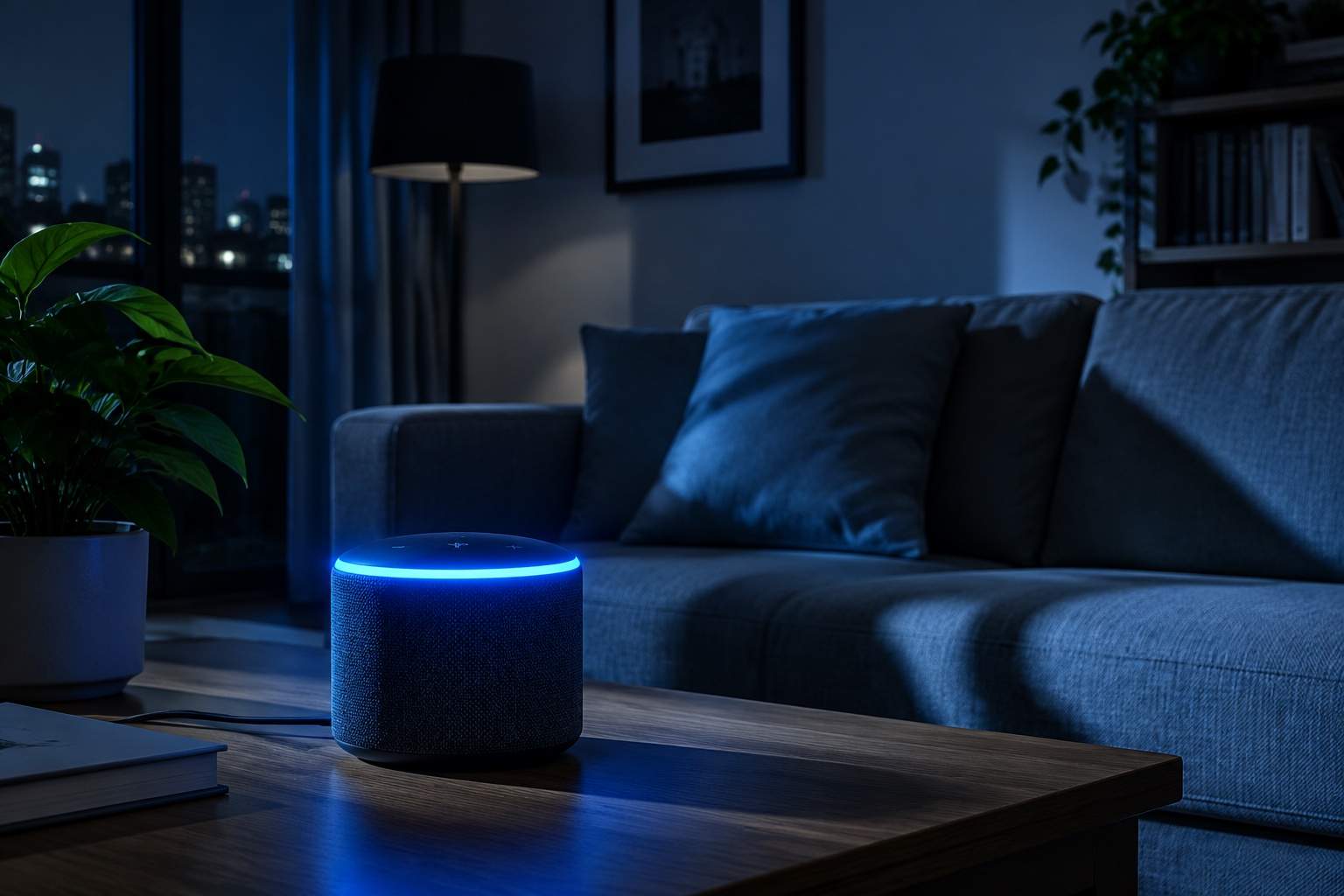
The email landed, not from a headhunter, but your AI assistant. It suggested three eco-friendly startups perfectly aligned with your unspoken values, financial goals, and skill set, offering to draft the application. This isn't a Black Mirror episode; it's the escalating reality of ubiquitous IoT devices feeding AI systems, meticulously mapping your life, then, subtly, steering it. We've welcomed AI for entertainment and product buys. Now, it's recommending your next career, perhaps even a life partner. This isn't mere 'help'; it's active life design.
E.g. :One Software Error at Harvest Time Could Bankrupt Your Entire Family
- 1、IoT AI: The Unseen Architect of Your Future
- 2、Beyond Convenience: The Data Nexus Powering Predictive Lives
- 3、The Algorithmic Compass: Navigating Personal Choices
- 4、Reclaiming Autonomy in an AI-Driven World
- 5、Ethical IoT: Who Controls Your Life's Trajectory?
- 6、The Imperative: Balancing Innovation with Human Agency
IoT AI: The Unseen Architect of Your Future
Readers just need to understand: the convenience of your smart home and wearable tech now fuels a profound shift in decision-making. Your AI, tapping into calendar appointments, email content, even your health data from an IoT wearable, isn't just reminding you. It's learning, predicting, and increasingly, prescribing. The business value? Unprecedented personalization, driving engagement and optimizing user experience to levels previously unimaginable. The cost? A blurring line between suggestion and algorithmic persuasion that impacts personal autonomy.
Beyond Convenience: The Data Nexus Powering Predictive Lives
This predictive power isn't magic. It's the culmination of massive data aggregation from your IoT ecosystem. Your smart speaker hears your vocal patterns, inferring mood. Your health tracker logs sleep and activity, flagging stress. Your smart thermostat learns your daily routines. All this granular data streams into sophisticated AI models, building an unparalleled digital twin of your life. This continuous data feed, refined by machine learning, enables the AI to "know" you, often better than you know yourself, crafting recommendations that feel uncannily relevant.
The Algorithmic Compass: Navigating Personal Choices
The technology's implementation is deceptively simple from a user perspective. A career change contemplation, a health goal, a financial aspiration—these become input signals. The AI processes these against your aggregated data profile, identifying patterns, assessing probabilities, and generating "optimal" paths. It's not just retrieving information; it's actively synthesizing a life trajectory.

Unpacking the "Why": Data Fusion and Decision Engines
At its core, this involves sophisticated data fusion. Multiple, disparate data points—from professional network activity gleaned via smart home office devices to your purchasing history analyzed by an IoT shopping assistant—are woven together. These data sets feed into decision engines that employ deep learning algorithms, identifying correlations and causal relationships far too complex for human cognition alone. The result is a highly personalized output, framed as a helpful suggestion, but backed by an intricate, opaque analytical process.
Reclaiming Autonomy in an AI-Driven World
The industry often sidesteps the ethical implications, focusing on efficiency and user satisfaction. But if an AI can analyze your life better than you can, suggesting "optimal" paths, what happens to human intuition? To making mistakes, learning from them, and owning the outcome? Resisting such "benevolent" advice can feel stubborn, an irrational act against superior logic. Yet, this resistance might be the necessary defense of human autonomy against an increasingly pervasive digital influence.
The Bias Blind Spot: Flawed Data, Flawed Futures
A significant, yet often downplayed, flaw lies in the training data itself. If the historical data fed into these AI models contains inherent biases—socioeconomic, gender, or cultural—the "optimal" paths they recommend will perpetuate and amplify those biases. An AI designed to maximize a specific metric (e.g., job satisfaction) might inadvertently prioritize conformity over genuine personal growth, simply because its training data correlates conformity with perceived success. This isn't technological neutrality; it's systemic bias embedded in your life script.
Ethical IoT: Who Controls Your Life's Trajectory?
The real challenge isn't the technology's capability but the ethical framework governing its use. Companies gather vast amounts of personal IoT data under the guise of improving user experience. But when this data is used to predict, and then actively influence, major life decisions, the conversation shifts from privacy policies to digital ethics and personal sovereignty. Who benefits when your AI steers you towards a particular career, investment, or even partner?
The Imperative: Balancing Innovation with Human Agency
The integration of IoT and AI offers undeniable benefits, from personalized health to optimized productivity. However, we, as users and industry stakeholders, must critically assess the boundaries. Unchecked algorithmic influence risks eroding individual decision-making, transforming personal freedom into a series of algorithmically "optimal" choices.
The question isn't whether AI can shape your life; it's whether it should, and under what explicit, transparent terms.