During a record-breaking summer heatwave, thousands of homeowners feel a sense of eco-conscious pride when their utility company remotely taps into their plugged-in electric vehicles and home wall batteries to prevent a blackout. The utility app sends a push notification thanking the user for contributing to grid resilience, rewarding them with a modest three-dollar credit on their monthly bill. Yet, beneath this seamless digital interaction lies an uncomfortable financial exchange that most consumers never realize until years later. While the utility company avoids firing up an expensive natural gas peaker plant, your five-figure investment in energy storage just underwent dozens of aggressive micro-discharge cycles that permanently degraded its internal chemistry.
E.g. :Sustainable Plastics: A Microplastic Health Hazard Hiding in Plain Sight?
- 1、The Promise of Virtual Power Plants and the Reality of Battery State of Health SoH
- 2、How IEEE 2030.5 Protocol Enables Utility Control Over Private Energy Assets
- 3、Dynamic Load Balancing and the Physical Mechanics of Accelerated Battery Degradation
- 4、Peak-Shaving Arbitrage Shifting Capital Risk from Utilities to Consumers
- 5、Redefining Consumer Safeguards in Next-Generation Energy Grids
The Promise of Virtual Power Plants and the Reality of Battery State of Health SoH
The clean energy industry has aggressively marketed distributed energy resources as a passive income stream for modern households. By combining residential solar panels, home storage batteries, and electric vehicles into a decentralized network, software aggregators can trade excess power back into the energy market.
However, this revenue narrative conveniently overlooks the complex electrochemistry governing Battery State of Health SoH. Every time a utility company pulls power from a private battery to stabilize the grid, the battery undergoes electrochemical stress through lithium plating and solid electrolyte interphase layer growth.
Unlike utility-scale battery installations designed with specialized liquid cooling and industrial replacement schedules, residential batteries and electric vehicles bear high replacement costs that are financed entirely by individual owners. When micro-discharging occurs at high states of charge during peak summer evenings, capacity loss accelerates far beyond standard driving or daily household use.
How IEEE 2030.5 Protocol Enables Utility Control Over Private Energy Assets
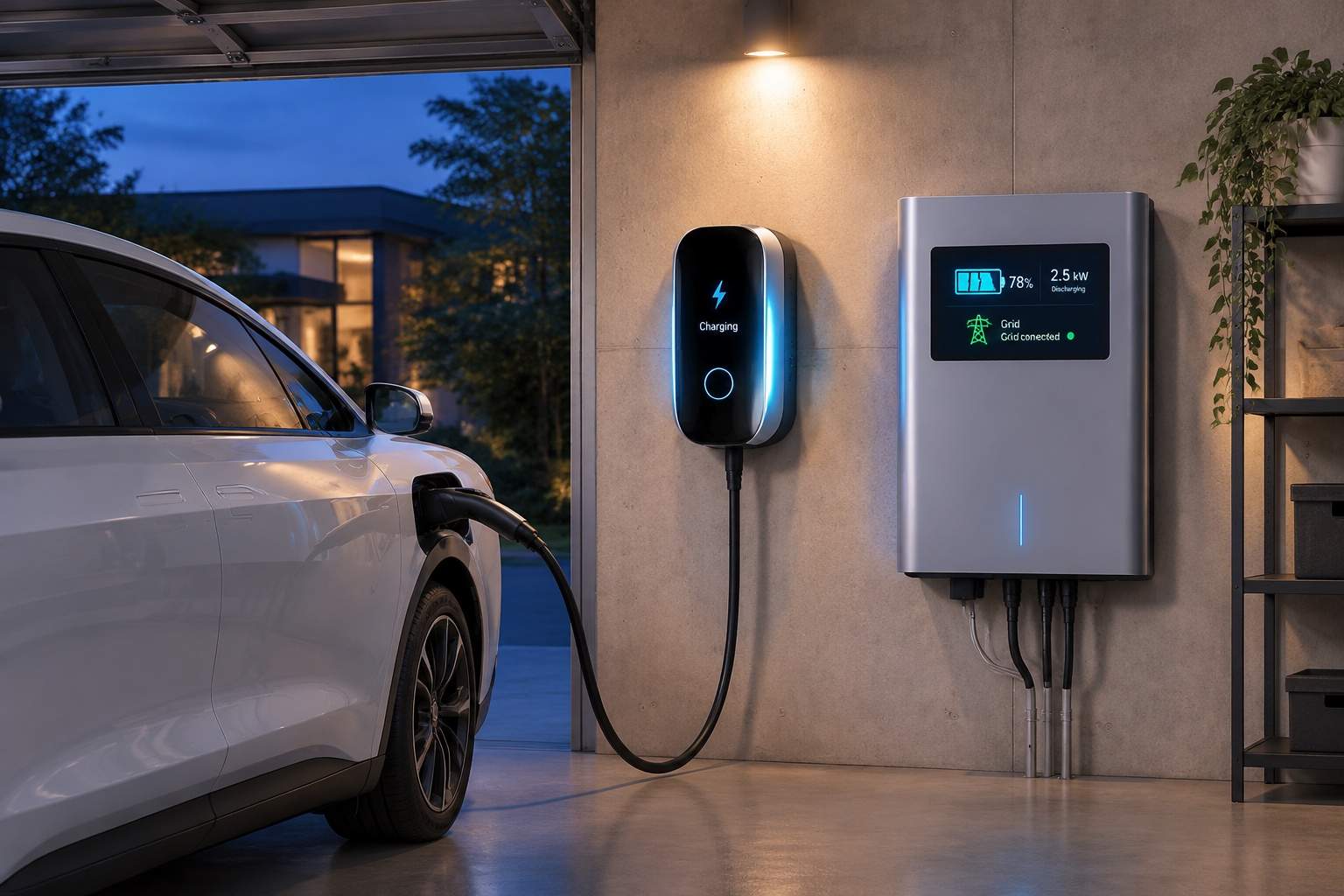
Modern smart grid architecture relies heavily on open communication standards to orchestrate millions of distributed endpoints in real time. The IEEE 2030.5 Protocol serves as the digital bridge, allowing utility operators to send direct control commands to smart inverters, EV chargers, and battery management systems.
Through this standardized interface, energy companies gain deep visibility and granular control over private energy hardware. While this interoperability ensures grid safety, it effectively establishes a digital tether that turns consumer-owned assets into flexible, remote-controlled infrastructure for the utility provider.
When localized power demand spikes, utility algorithms automatically deploy remote commands through these protocols to draw stored energy across entire neighborhoods. The user experiences no physical intervention, yet their personal hardware is actively mobilized to perform critical utility operational tasks.
The Asymmetry of Peak-Shaving Arbitrage Economics
Grid operators save millions of dollars in deferred capital expenditure by utilizing private batteries for peak-shaving arbitrage instead of building new distribution substations or maintaining standby gas turbines. The economic value generated by preventing localized voltage collapse during peak demand hours is immense for the utility enterprise.
In stark contrast, the financial compensation funneled back to the individual asset owner typically amounts to mere pennies per kilowatt-hour shared. This stark economic disparity leaves consumers bearing the full burden of hardware depreciation while power companies capture the vast majority of operational savings.
Calculating the Hidden Cost of Vehicle-to-Grid V2G Micro-Discharging
Implementing Vehicle-to-Grid V2G technology introduces rapid, small-amplitude discharge cycles that occur while the vehicle is parked and supposedly resting. Empirical studies from energy laboratories demonstrate that these repeated partial cycles near full charge induce disproportionate mechanical stress on battery cathodes.
Considering that replacing a residential energy storage unit or EV battery pack costs between one hundred and one hundred fifty dollars per kilowatt-hour, losing even one percent of total capacity equates to hundreds of dollars in asset devaluation. If a summer grid program pays twenty dollars in total season credits while consuming fifty dollars of battery lifespan, the consumer incurs a net financial loss.
Dynamic Load Balancing and the Physical Mechanics of Accelerated Battery Degradation
Dynamic load balancing algorithmically throttles charging or forces discharge based on immediate grid frequency fluctuations. When frequency drops unexpectedly, software triggers instantaneous high-power draws from connected residential units to restore equilibrium across the local circuit.
These sudden power spikes generate localized internal heat within battery cells, accelerating unwanted chemical side reactions. High C-rate discharges during peak thermal conditions represent the single most destructive environment for long-term lithium-ion retention.
While sophisticated battery management systems attempt to regulate temperatures, residential enclosures often lack the massive active cooling systems found in industrial power plants. Consequently, frequent response events inevitably degrade cell uniformity and lower overall system throughput over time.
Peak-Shaving Arbitrage Shifting Capital Risk from Utilities to Consumers
The core structural issue within current demand-response programs is the uncompensated transfer of capital risk. Historically, energy utilities were required to invest corporate capital into robust transformers, peaker plants, and transmission upgrades to handle maximum forecasted loads.
By offloading grid stabilization onto home storage units and electric vehicles, utilities effectively shift high-risk capital expenditure into lower-cost operational expenditure. Private citizens become the unpaid financiers of grid stability, absorbing asset depreciation on their personal balance sheets while receiving minimal utility bill discounts.
Without regulatory mandates forcing utilities to fully compensate asset degradation, the current framework incentivizes energy providers to exploit private hardware to maximum operational limits.
Redefining Consumer Safeguards in Next-Generation Energy Grids
Resolving this systemic imbalance requires a fundamental shift in how smart grid software evaluates the true cost of distributed energy. Compensation algorithms must factor in real-time electrochemical degradation models alongside raw kilowatt-hour delivery rates.
Emerging frameworks suggest implementing battery health protection protocols that automatically cap V2G discharge depth and frequency based on ambient temperature and current state of charge. Furthermore, utility regulations must demand transparent revenue sharing that guarantees consumer payouts exceed total physical battery wear.
Transiting to a fully clean energy grid should not rely on quiet cost-shifting to unsuspecting homeowners. Only when utility software recognizes private batteries as high-value assets rather than free grid padding will distributed energy storage reach its true potential.