We diligently sort our recycling, conscientiously choose products in "biodegradable" packaging, and feel a genuine pang of guilt when confronted with plastic waste. This commitment to what we perceive as "eco-friendly" solutions is commendable, driven by a global anxiety surrounding environmental degradation. Yet, beneath this surface of good intentions and industry-promoted narratives, independent scientific research consistently confirms a startling reality: you are consuming microplastics daily, from the water in your "reusable" bottle to the food from "sustainable" packaging. This cognitive dissonance—between our efforts and the grim implications—reveals a significant gap in our understanding of true plastic sustainability and its profound impact on human health.
E.g. :The 'Circular Economy' Illusion: Are Your Recycling Efforts Just Industry's Hidden Waste Burden?
- 1、The Unseen Harvest: Microplastics in Our Daily Diet
- 2、Beyond "Eco-Friendly": The Chemical Migration Hazard in Packaging
- 3、"Biodegradable" and "Compostable": A Green Façade for Polymer Complexity
- 4、Advanced Recycling: A Technological Fix or a Perpetuation of Plastic Production?
- 5、Redefining Responsibility: From Individual Burden to Systemic Redesign
The Unseen Harvest: Microplastics in Our Daily Diet
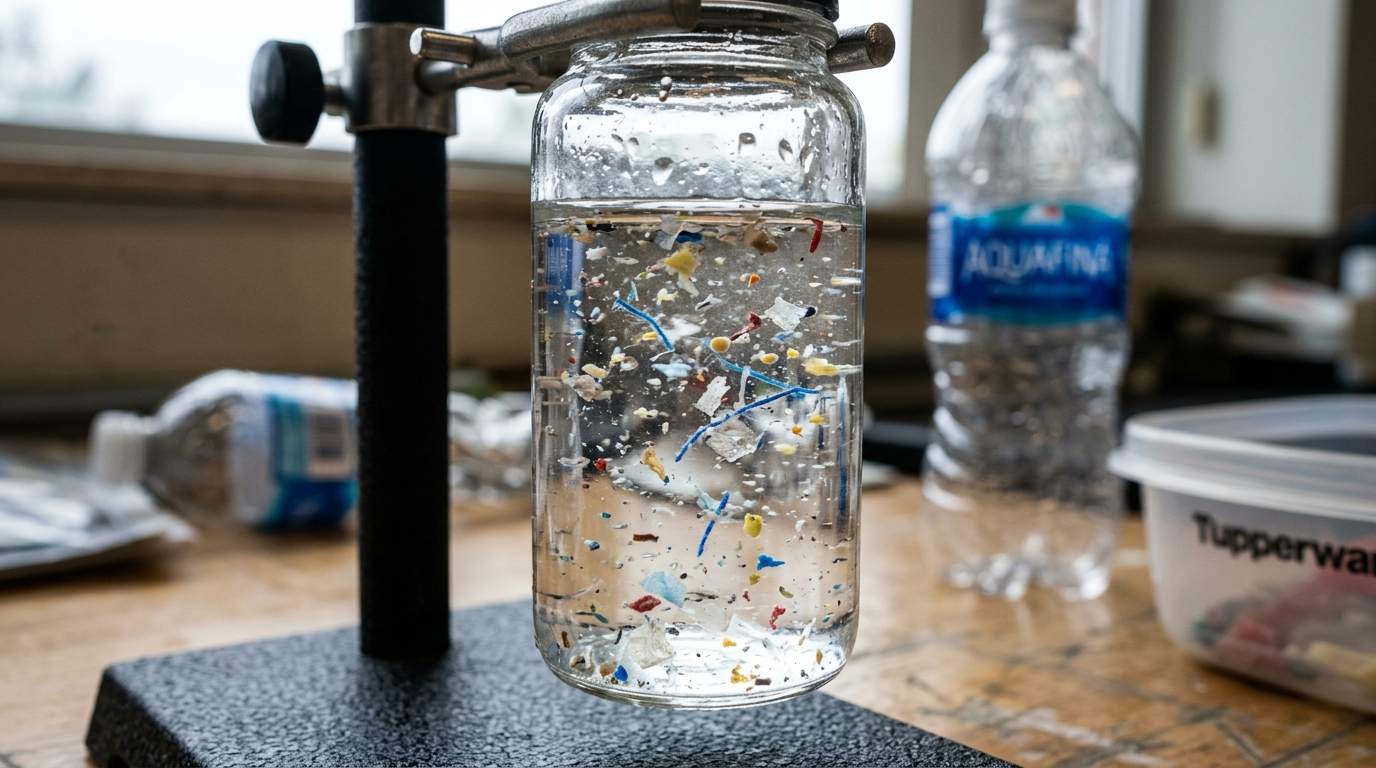
The notion that we are ingesting plastic might sound like science fiction, yet it has become a pervasive element of our modern existence. Microplastics, tiny fragments less than 5 millimeters in length, permeate our environment, entering our bodies through myriad pathways. Studies from institutions worldwide have detected these particles in bottled water, tap water, sea salt, beer, and even the air we breathe, fundamentally altering our relationship with the purity of our sustenance. These invisible invaders are not just inert particles; their surfaces can attract and carry environmental toxins, effectively acting as vectors for harmful substances into our biological systems.
Nanoplastics: The Invisible Threat in Our Food Chain
While microplastics present a clear challenge, an even more insidious threat emerges with nanoplastics—particles smaller than 100 nanometers. Due to their minute size, nanoplastics possess a greater ability to penetrate biological barriers, including cell membranes, the blood-brain barrier, and potentially even the placenta. Research into the movement of these nanoparticles through food chains indicates that they are not merely passing through organisms but are being absorbed into tissues and organs. The long-term polymer toxicology of these ultra-fine particles, and their potential to accumulate and induce cellular stress, inflammation, or genetic damage, remains an urgent area of scientific inquiry, demanding a precautionary approach to plastic proliferation.
Beyond "Eco-Friendly": The Chemical Migration Hazard in Packaging
The physical presence of microplastics is only one dimension of the plastic problem; the chemical constituents of plastic products themselves pose an equally significant, if not greater, health hazard. Everyday plastics are a complex cocktail of polymers, plasticizers, flame retardants, UV stabilizers, and other additives, many of which are not chemically bound to the polymer matrix. This allows them to leach out, migrating into the food and beverages they contain, and subsequently into our bodies. Independent analyses consistently demonstrate chemical leaching packaging across virtually all plastic types, including those labeled "BPA-free" or "phthalate-free," as alternative chemicals often carry similar or unknown health risks.
Endocrine Disruptors: Unpacking the Hormonal Impact of Plastics
Among the most concerning of these migrating chemicals are endocrine disruptors, substances that interfere with the body's hormonal system. Phthalates, often used to make plastics more flexible, and bisphenols (like BPA, BPS, and BPF, used in polycarbonate plastics and epoxy resins) are prime examples. These compounds can mimic natural hormones, block hormone receptors, or alter hormone synthesis and metabolism, potentially leading to a cascade of adverse health effects. The impacts range from reproductive issues and developmental problems in children to increased risks of metabolic diseases and certain cancers. The pervasive nature of these chemicals, even in "recycled" or "bio-based" plastics, suggests a systemic failure to prioritize inherent material safety over convenience and cost.
"Biodegradable" and "Compostable": A Green Façade for Polymer Complexity
The plastic industry frequently champions "bio-based" or "compostable polymers" as sustainable solutions, painting a picture of materials that gracefully return to nature. However, the reality of biodegradable plastics greenwashing is far more complex. Many so-called "biodegradable" plastics require specific industrial composting conditions—high temperatures, specific microbial populations—that are rarely met in household compost bins or even municipal landfills. Without these precise conditions, they often behave like conventional plastics, breaking down into microplastics and nanoplastics, persisting in the environment for extended periods. Furthermore, "bio-based" simply means derived from plant sources, not necessarily biodegradable or non-toxic; these materials can still contain harmful additives or degrade into problematic fragments. The lifecycle of these materials, from feedstock cultivation to end-of-life processing, requires rigorous life cycle assessment (LCA) to truly ascertain their environmental footprint and safety profile.
Advanced Recycling: A Technological Fix or a Perpetuation of Plastic Production?
In response to the mounting plastic waste crisis, the industry increasingly promotes "advanced recycling technologies," such as chemical recycling, as a panacea for achieving a circular economy. These technologies aim to break down plastics into their chemical building blocks, which can then be used to create new plastics. While promising in theory, the efficacy and scalability of advanced recycling remain contentious. These processes are often energy-intensive, produce significant carbon emissions, and can yield a lower quality output requiring virgin plastic inputs for fortification. Critically, focusing on "end-of-pipe" solutions like advanced recycling diverts attention and investment from the more fundamental imperative: radical source reduction and material redesign. This emphasis on managing waste rather than fundamentally reducing virgin plastic production is a classic example of externalized costs, where industry profits from ambiguous "solutions" while the public shoulders the health risks and environmental remediation.
Life Cycle Assessment: Unmasking the True Costs of Plastic Alternatives
To truly evaluate the environmental and health implications of any plastic solution or alternative, a comprehensive Life Cycle Assessment (LCA) is indispensable. An LCA provides a holistic view, examining the environmental impacts of a product from raw material extraction, through manufacturing, distribution, use, and ultimately, disposal or recycling. This methodology helps expose the "hidden" costs—such as the water footprint of bio-based plastics, the energy demands of advanced recycling, or the toxicity profile of novel polymer additives—that might be overlooked in simpler "green" claims. Without rigorous LCA, particularly for polymer toxicology, we risk exchanging one set of problems for another, believing we've found solutions when we've merely shifted the burden.
Redefining Responsibility: From Individual Burden to Systemic Redesign
The pervasive exposure to microplastics and chemical leachates, coupled with growing anxiety about long-term health impacts, particularly on vulnerable populations, creates a deep-seated frustration. The burden of managing plastic pollution and its consequences falls disproportionately on individuals, who are expected to sort, recycle, and navigate confusing "eco-friendly" labels, all while major producers continue to externalize environmental and health costs. This highlights the failure of current Extended Producer Responsibility (EPR) frameworks, which often lack the teeth to drive fundamental material redesign and source reduction. True progress necessitates a paradigm shift: producers must be held accountable for the entire lifecycle of their products, incentivized to innovate inherently safe materials, and mandated to drastically reduce virgin plastic production. Only then can we hope to move beyond superficial "solutions" towards genuine material safety and environmental health.
The journey towards a truly sustainable future free from the invisible shackles of plastic pollution is not merely about better recycling or greener labels; it is about fundamentally rethinking our relationship with materials. It demands a scientific rigor that pierces through marketing rhetoric, an ethical imperative to protect public health, and a systemic shift in producer accountability. The dividends of such a future are profound—a healthier planet, healthier people—but they require us to confront uncomfortable truths about our "eco-friendly" illusions.