Every week, the ritual unfolds: plastics, papers, glass, meticulously sorted, often guided by faint symbols or the municipality's latest, often convoluted, guidelines. This diligent practice is widely believed to be the consumer’s crucial contribution to a "circular economy," a vision where waste is minimized, and resources are kept in use for as long as possible. Yet, a persistent, gnawing doubt whispers: are these efforts truly effective, or are they a well-orchestrated facade, allowing industries to profit from complex packaging while offloading environmental responsibility onto the very individuals trying to make a difference?
E.g. :Digital Well-being: A Mandate, Or Just Algorithmic Addiction in Disguise?
- 1、The Consumer's Recycling Quandary: Navigating an Opaque System
- 2、Material Design: The Unseen Obstacle in Polymer Recycling Challenges
- 3、Infrastructure Gaps: When "Circular Economy" Meets Reality
- 4、Extended Producer Responsibility (EPR): A Missing Link in Waste Management?
- 5、Beyond the Bin: Exposing "Greenwashing Packaging" and True Sustainability
This profound sense of confusion and futility stems from a glaring asymmetry of interests. Consumers expend uncompensated time and emotional energy navigating an opaque waste management system, often paying taxes and fees for services that seem perpetually overwhelmed. Meanwhile, producers frequently design products and packaging with multiple materials, rendering them inherently difficult or uneconomical to process, thus externalizing the true environmental costs onto the public and municipal systems. This disjunction directly challenges the consensus that our current recycling infrastructure adequately supports a genuine, end-to-end circular material flow.
The Consumer's Recycling Quandary: Navigating an Opaque System
The expectation placed upon individual consumers to be experts in waste segregation is immense, yet the tools and clarity provided are often woefully insufficient. From the infamous "chasing arrows" symbol that often signifies plastic type rather than actual recyclability, to the constantly shifting local regulations, the burden of proper disposal becomes a significant, unacknowledged labor. This hidden labor is not merely physical; it imposes a cognitive load, fostering a sense of anxiety and ultimately, skepticism towards the broader claims of corporate sustainability.
Material Design: The Unseen Obstacle in Polymer Recycling Challenges
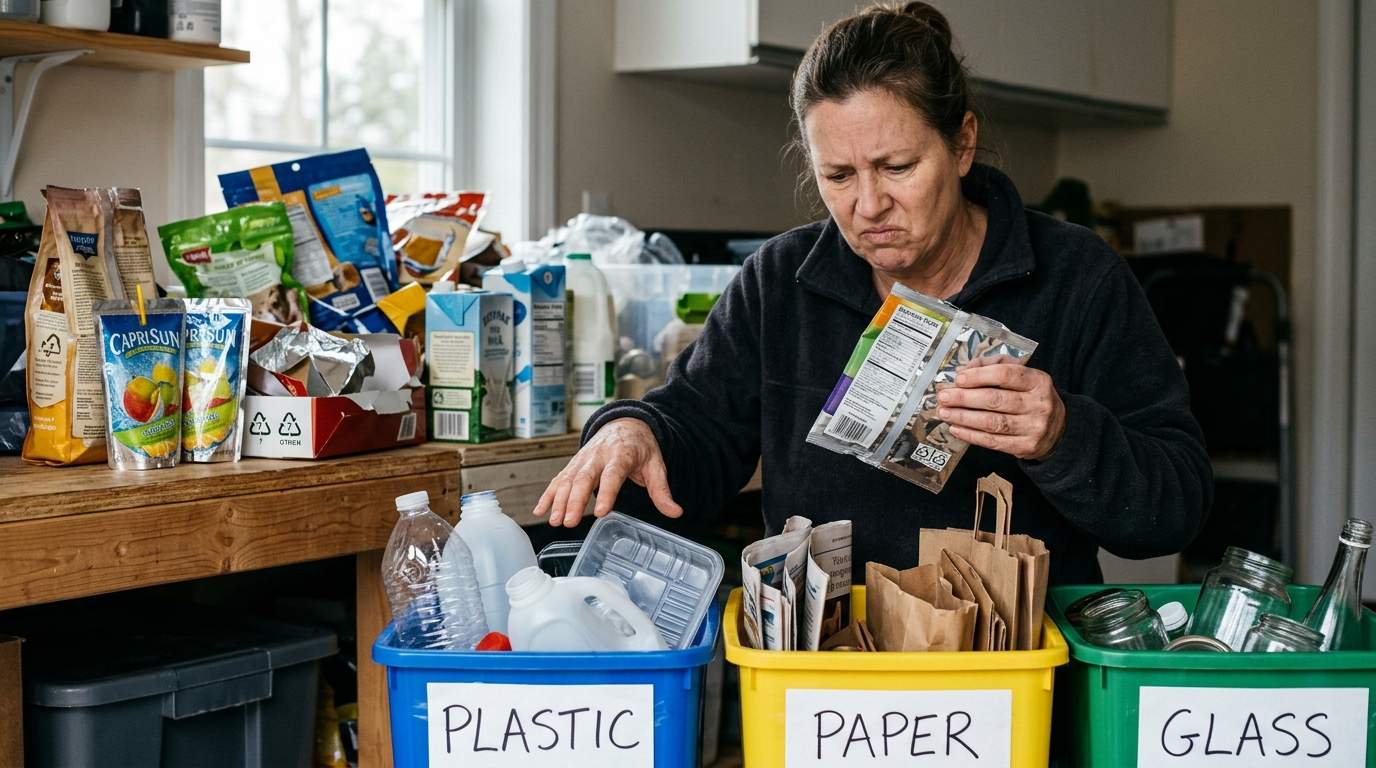
At the heart of many recycling failures lies not the consumer's lack of effort, but fundamental choices made far upstream in the design process. Packaging engineered for maximum shelf appeal or product protection often prioritizes these factors over end-of-life considerations, creating formidable polymer recycling challenges. Multi-material laminates, for instance, combining different types of plastics or even layers of plastic, foil, and paper, are virtually impossible to separate economically in standard recycling facilities, despite often bearing misleading recycling symbols.
The Contamination Conundrum
These design choices directly contribute to alarmingly high contamination rates within collected recyclables. When a multi-material product like a juice pouch, designed with several layers of plastic and aluminum, enters a recycling stream intended for a single polymer, it becomes a contaminant. This single item can compromise an entire bale of otherwise recyclable material, diverting it to landfill or incineration, undermining the diligent efforts of countless individuals. The economic unviability of meticulously separating these complex materials post-consumer is a critical bottleneck.
Infrastructure Gaps: When "Circular Economy" Meets Reality
Even where materials are theoretically recyclable and consumers sort diligently, the physical infrastructure often falls short of the ambitious vision of a true circular economy. Many municipalities lack the specialized facilities required to process the diverse array of plastic polymers, let alone sophisticated composites. Material flow analysis frequently reveals significant leakage points, where collected "recyclables" are either downcycled into lower-value products or simply stockpiled, waiting for non-existent processing capabilities or volatile market prices.
Untangling Complex Material Flows
The journey of a supposedly recyclable item from your curb to a new product is fraught with complexities. For example, while PET plastic bottles (type 1) have a relatively robust recycling pathway, many other plastic types, particularly films, flexibles, and rigid plastics beyond PET and HDPE (type 2), encounter severe hurdles. The lack of standardized collection, sorting technologies, and robust reprocessing markets means that a considerable volume of collected materials never completes the loop, becoming waste despite good intentions.
Extended Producer Responsibility (EPR): A Missing Link in Waste Management?
Extended Producer Responsibility (EPR) schemes aim to shift the financial and/or operational burden of managing a product's end-of-life from municipalities and taxpayers back to the producers. The core principle is compelling: incentivize companies to design more sustainable, recyclable products by making them accountable for the waste their products generate. While EPR policies exist in various forms globally, their effectiveness varies wildly. Many current schemes allow producers to pay relatively modest fees, effectively treating recycling as a minor cost of doing business rather than a fundamental design imperative. This often fails to drive the systemic changes in material selection and product design truly necessary for a circular economy, perpetuating the status quo where consumers continue to shoulder the waste burden.
Beyond the Bin: Exposing "Greenwashing Packaging" and True Sustainability
The current landscape breeds a profound cynicism, where corporate sustainability claims often feel like mere "greenwashing packaging." Companies frequently highlight minimal recycled content or vague "eco-friendly" labels on products that remain fundamentally unrecyclable due to their multi-material composition. This tactic exploits consumers' desire to do good, creating an illusion of progress without enacting substantive change. A true Life Cycle Assessment (LCA) would reveal the full environmental footprint, from material extraction to end-of-life, exposing where genuine circularity is achieved and where it remains a distant aspiration. Moving beyond symbolic gestures demands that industries internalize the costs of their material choices and invest meaningfully in design for recyclability, robust infrastructure, and transparent accountability.
Ultimately, while individual recycling efforts are commendable and necessary, they are not a panacea. The vision of a truly circular economy cannot rest solely on the diligent shoulders of consumers. It requires a fundamental re-engineering of product design, a significant upgrade of processing infrastructure, and robust, enforceable Extended Producer Responsibility policies that compel producers to innovate for true recyclability. Only then can we move beyond the illusion and build a future where our waste burden is genuinely reduced, rather than merely externalized.