When a suburban couple audited their cloud camera settings after noticing unusual network uploads, they made a troubling discovery: high-definition footage recorded inside their living room had been transcribed into labeled training frames for their provider's commercial computer vision algorithms. They were not using a free application supported by ad placements, but were paying twelve dollars every month for what advertised itself as secure cloud storage and privacy protection. Most consumers operate under the intuitive belief that paying a premium subscription transforms a digital product into a private vault. The architectural reality of modern smart home hardware reveals a far more predatory economic model operating beneath the user interface.
E.g. :Your Package is 500 Meters Away but Six Hours Late: The Last Mile IoT Illusion
- 1、The Privacy Mirage in Modern Smart Home Encryption
- 2、Key Escrow and the Illusion of End-to-End Encryption
- 3、The Economics of Dual Monetization in Cloud Storage
- 4、Edge AI Inference Versus Cloud Centric Processing
- 5、Zero Trust Architecture for Consumer Hardware Solutions
The Privacy Mirage in Modern Smart Home Encryption
The fundamental disconnect between consumer expectations and smart camera operations stems from how hardware manufacturers define privacy in their marketing documentation. Most camera vendors assure buyers that all data in transit utilizes bank-grade transport layer encryption protocols, which sounds reassuring to the average consumer. Transport encryption merely shields the video pipeline from external network eavesdroppers while leaving the vendor with complete administrative clearance to read the underlying payload.
When video frames land on the centralized server infrastructure, they are decrypted by the vendor to perform routine server-side functions like package identification or person detection. Real-world incidents, such as the public security vulnerabilities exposed in unencrypted thumbnail streams across major smart camera brands in recent years, demonstrate that cloud storage environments frequently retain unencrypted video buffers. Consumers assume their monthly fee purchases absolute confidentiality, but in practice, it merely rents cloud server processing power that processes their raw domestic life into corporate training assets.
Key Escrow and the Illusion of End-to-End Encryption
True cryptographic privacy relies on end-to-end encryption architecture where the decryption key never leaves the client device controlled by the user. Most smart home vendors avoid deploying true end-to-end encryption by default because it restricts their ability to process video data on their remote server clusters. Instead, these platforms rely on key escrow systems, holding master decryption keys on their proprietary servers while promising users that access is strictly governed by internal security policies.
How Vendor Key Management Weakens Data Ownership
Key escrow architecture creates an inherent structural vulnerability by granting vendor infrastructure the capability to decrypt video streams at any moment without explicit user intervention. Because the vendor manages the private keys, they maintain technical access to raw video feeds, which can be funneled into data preparation pipelines for training deep learning models. Privacy agreements routinely contain vague provisions permitting vendors to utilize anonymized media assets to enhance product features, effectively turning user living rooms into real-world data collection environments.
Telemetry Harvesting Hidden Behind Motion Detection
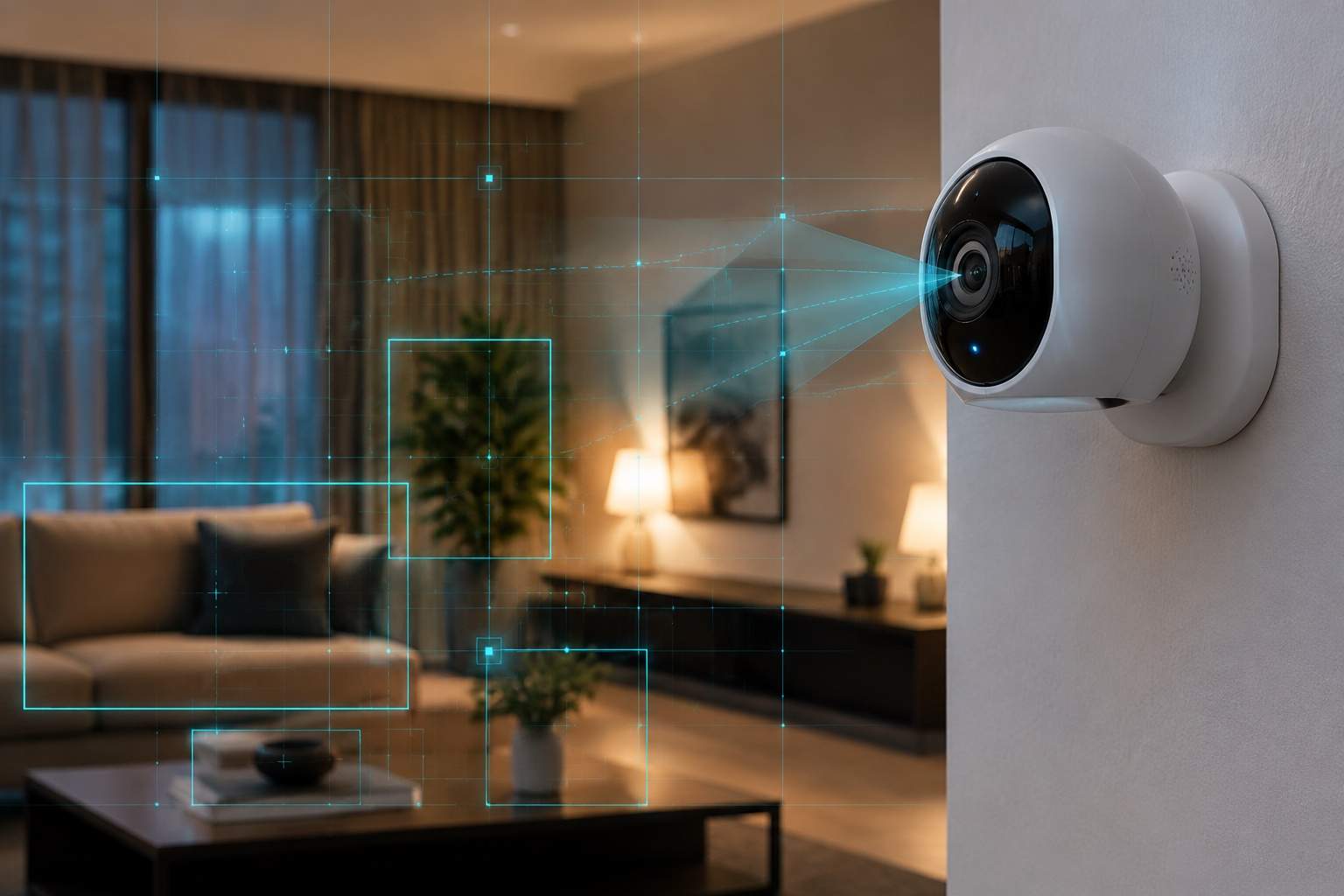
Beyond raw video feeds, modern smart cameras continuously collect structural telemetry metadata that exposes detailed domestic routines. Every time motion sensor thresholds are triggered, the camera logs timestamped spatial coordinates, duration metrics, and bounding-box coordinates outlining objects and occupants. This structural metadata serves as high-quality supervisory signals for machine learning models, allowing vendors to train spatial intelligence algorithms without paying for curated datasets.
The Economics of Dual Monetization in Cloud Storage
Building state-of-the-art computer vision models for spatial intelligence requires hundreds of thousands of hours of high-diversity real-world indoor video. Purchasing licensed dataset libraries or hiring human annotators to record domestic environments carries immense capital costs for technology corporations. Smart camera vendors realized that by retaining control over cloud-based processing pipelines, they could offload the cost of data acquisition directly onto their subscriber base.
Hardware margins on consumer indoor cameras have compressed significantly, prompting manufacturers to transform hardware sales into entry points for recurring revenue engines. Under this dual-monetization framework, the consumer pays for the physical device, pays a monthly fee to store footage, and unknowingly supplies the primary raw material required to train commercial AI products. The financial incentives of cloud camera manufacturers are fundamentally aligned with maximizing data ingestion rather than minimizing data exposure.
Edge AI Inference Versus Cloud Centric Processing
Industry marketing frequently claims that continuous cloud transmission is mandatory to deliver advanced artificial intelligence features like facial recognition or pet detection. Modern silicon engineering completely undermines this argument, as contemporary system-on-chip hardware designed for low-power edge devices packs powerful neural processing units. A modern security camera equipped with local silicon can run complex deep learning models directly on the physical hardware, processing video streams locally without sending a single frame of raw footage over the public internet.
Silicon Processing Power vs Cloud Dependency
Deploying local edge AI inference allows hardware to analyze spatial events in real time with near-zero latency while preserving complete data isolation. However, widespread adoption of pure edge processing would sever the constant data stream flowing back to vendor server farms, effectively ending their ability to collect real-world training data. Vendors deliberately slow down the transition toward localized edge computing to maintain their data monopolies, masking a strategic business retention decision behind technical excuses about cloud capability requirements.
Zero Trust Architecture for Consumer Hardware Solutions
Reclaiming data sovereignty in the modern domestic environment requires shifting away from vendor-managed cloud ecosystems toward local network architectures. Implementing a zero trust network model involves isolating smart home hardware onto dedicated virtual local area networks that lack outgoing internet access. By preventing cameras from communicating directly with external vendor endpoints, homeowners eliminate the technical vector used for remote key management and telemetry harvesting.
Utilizing open-source video management platforms paired with local storage equipment ensures that video feeds are ingested and analyzed inside the home perimeter. Standardized local streaming protocols allow users to run open-source computer vision algorithms on local micro-servers without sharing personal footage with cloud infrastructure. Shifting hardware control back to the local network transforms smart security devices from corporate data gathering tools back into genuine private infrastructure.
The systematic monetization of consumer video data highlights how subscription fees frequently finance the infrastructure used to harvest user privacy. Shifting from vendor cloud lock-in toward local edge intelligence represents the only viable path to restoring absolute domestic data sovereignty. Real security requires architecture that eliminates vendor trust entirely, ensuring your home remains a private sanctuary rather than a dataset pipeline.