Your latest electricity bill probably arrived with a quiet shock, a figure seemingly at odds with your conscientious efforts to conserve energy. You've embraced smart home devices, perhaps even considered solar, all while your utility company heralds its grand investments in green energy and a modernized, "smart" grid. Yet, the promised savings remain elusive, leaving a nagging suspicion: are we silently subsidizing a complex future that prioritizes operational efficiency over transparent, affordable power for the average household?
E.g. :Why Precision IoT Greenhouse Produce Spoil Faster in Smart Home Refrigerators
- 1、The Illusion of Green Savings: Unpacking Your Energy Bill
- 2、Decoding the Distributed Generation Challenge
- 3、The Silent Cost of Grid Modernization and Stability
- 4、Net Metering Under Scrutiny: A Shifting Landscape
- 5、Towards a Transparent and Equitable Smart Grid Future
The Illusion of Green Savings: Unpacking Your Energy Bill
The public narrative surrounding renewable energy often focuses on the plummeting costs of solar panels and wind turbines, suggesting an inevitable path to cheaper electricity. This perception, while partially true for generation costs, frequently overlooks the broader, systemic expenses embedded within our increasingly complex energy infrastructure. While the electrons themselves might be cheaper to produce from a new solar farm, the journey they take to your home and the intricate dance required to keep the lights on reveal a far more nuanced financial picture for consumers.
Our electricity bills are not simply a reflection of energy production. They increasingly include opaque charges related to the substantial investments in grid stability and the continuous upgrading of transmission and distribution (T&D) infrastructure. These are the hidden arteries and nervous system of our power delivery, and their modernization is critical but costly, often leaving consumers with a sense of helplessness and distrust as these benefits accrue primarily to the energy providers, while the burden of new system costs is discreetly passed on.
Decoding the Distributed Generation Challenge
The aggressive push towards decarbonization champions distributed generation – smaller, localized power sources like rooftop solar arrays. This model offers compelling benefits, from enhanced grid resilience by reducing reliance on centralized power plants to empowering individual consumers to generate their own energy. However, this shift profoundly alters the dynamics of a grid historically designed for one-way power flow, presenting significant technical and financial challenges.
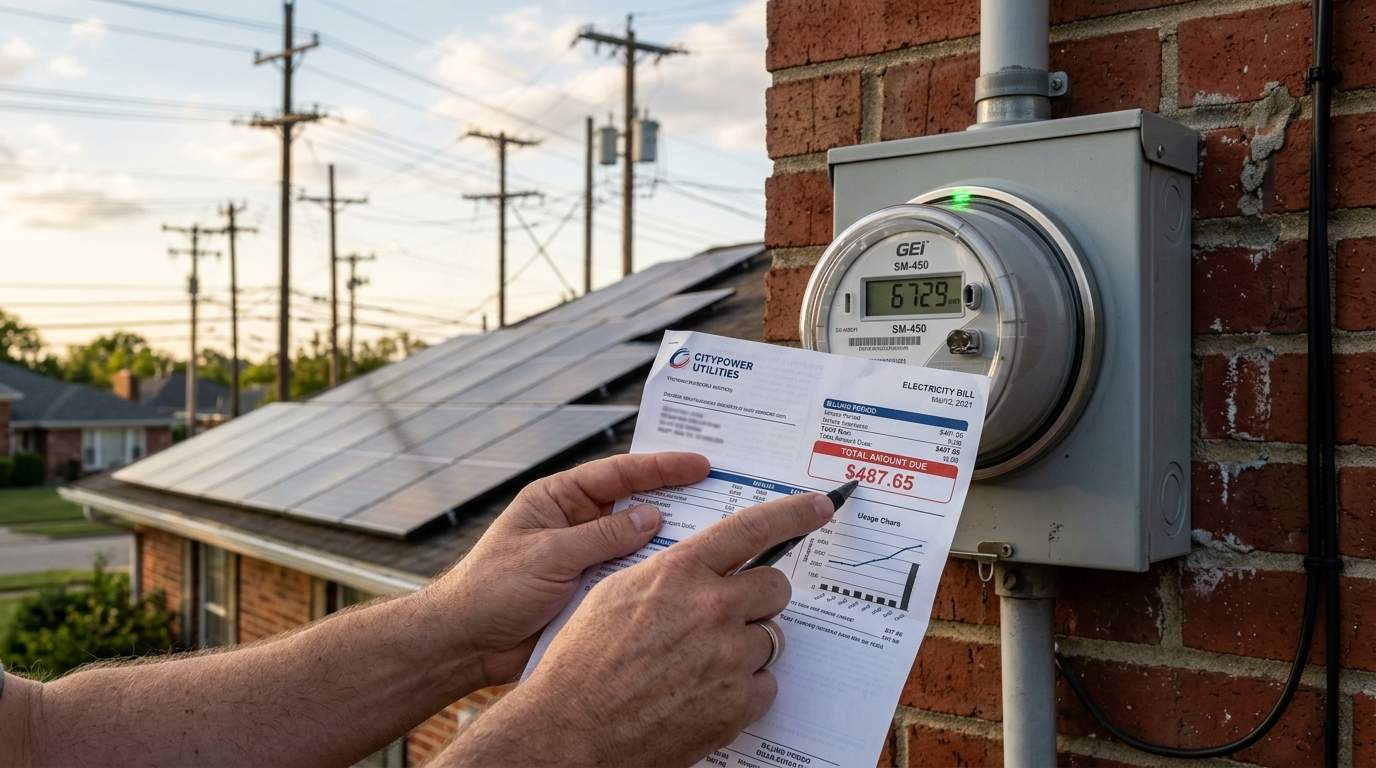
Integrating millions of intermittent, decentralized generators introduces a new layer of complexity. Unlike a large, predictable power plant, a single cloud passing over a solar farm, or a sudden drop in wind speed across a region, can instantly impact the grid's delicate balance. Managing this intermittency requires sophisticated, real-time adjustments across the entire system, a constant balancing act that incurs substantial operational costs.
The Intermittency Conundrum and Ancillary Services
The sun doesn't always shine, and the wind doesn't always blow – a fundamental truth that underpins the intermittency challenge. For the grid to remain stable, supply must precisely match demand at every millisecond. This isn't just about total energy; it's about maintaining correct voltage, frequency, and phase. Ancillary services are the unsung heroes performing these minute-by-minute balancing acts. These specialized services, like frequency regulation, voltage control, and operating reserves, ensure the grid's reliability, preventing anything from minor fluctuations to cascading blackouts. As the proportion of intermittent renewable energy grows, the demand and complexity of these ancillary services soar, driving up the overall system cost which ultimately reflects in consumer tariffs.
The Silent Cost of Grid Modernization and Stability
The term grid modernization often conjures images of sleek smart meters and apps that display real-time energy usage. While these are components, true grid modernization involves a far deeper transformation: digitizing vast sections of the grid, enabling two-way communication for real-time data, and deploying advanced control systems. This investment is crucial for optimizing energy flow, integrating diverse generation sources, and bolstering resilience against outages. Yet, the sheer scale of the required T&D infrastructure upgrades—new substations, stronger lines, intelligent sensors—represents an enormous capital expenditure that current rate structures struggle to absorb without impacting consumer bills.
Traditional power plants, particularly coal and nuclear, inherently provided system inertia—a physical resistance to sudden changes in frequency, like a massive flywheel that kept the grid stable. Renewable sources, connected via inverters, lack this natural inertia. To compensate, utilities must invest in alternative solutions, often large-scale energy storage or advanced inverters that can mimic inertia, all contributing to the hidden costs of a greener grid.
The Energy Storage Imperative: A Double-Edged Sword
The most promising solution for mitigating intermittency and providing crucial grid stability is energy storage, primarily large-scale battery systems. These colossal batteries can absorb excess power during periods of high renewable generation (e.g., sunny afternoons) and release it when generation drops (e.g., after sunset), acting as a flexible power reservoir. While essential for a high-renewable future, the initial capital outlay for these storage solutions is substantial, and their operational lifespan and efficiency are still evolving. These costs, much like those for T&D upgrades, are systematically integrated into our energy bills, creating a 'double-edged sword' where the necessity for stability comes with a significant price tag.
Net Metering Under Scrutiny: A Shifting Landscape
Net metering has long been a cornerstone policy incentivizing residential rooftop solar. Under this arrangement, solar panel owners receive credit on their electricity bills for any excess power they export to the grid, typically at the full retail rate. This effectively treats the grid as a giant battery, allowing prosumers to offset their consumption. However, as the penetration of distributed solar increases, utilities argue that net metering disproportionately shifts the burden of maintaining and upgrading the grid—including those crucial ancillary services and T&D costs—onto non-solar customers.
This has led to a shifting landscape where traditional net metering policies are being challenged, replaced by new tariffs that might include fixed charges, reduced compensation for exported energy (often at wholesale rates), or more complex "value of solar" calculations. While these adjustments aim to ensure equitable cost recovery for the grid's services, they can significantly alter the financial viability of rooftop solar for new adopters, creating uncertainty and potentially slowing the very distributed generation push they initially sought to accelerate.
Towards a Transparent and Equitable Smart Grid Future
The transition to a cleaner, smarter grid is not merely a technological endeavor; it's a societal one with profound economic implications. The tension between enhancing utility operational efficiency and profit margins and empowering consumers with genuinely transparent and lower costs lies at the heart of the current debate. For the "smart grid" to truly serve its promise, it must move beyond simply optimizing the energy system to explicitly prioritizing user experience and trust.
This demands greater clarity in billing, itemizing exactly what consumers are paying for beyond the kilowatt-hour. It requires policy frameworks that foster innovation in grid management while protecting vulnerable households from bearing the disproportionate costs of system-wide upgrades. Furthermore, it necessitates exploring dynamic pricing models that genuinely reward flexible consumption, coupled with robust consumer protections and educational initiatives, transforming the opaque 'digital shackles' into tools of empowerment.
The path to a fully decarbonized, resilient energy future is undeniably complex and costly. However, for this future to be truly "smart," it must not only be technologically advanced but also financially equitable and transparent. The gamble is whether we can build a system that illuminates our homes without simultaneously obscuring the true price of that light.