Imagine stepping into a "fully autonomous" ride-sharing vehicle, trusting its advanced systems to navigate the urban sprawl. Suddenly, without warning, the vehicle swerves violently, an unexpected maneuver that ends in a collision. Investigators later attribute the incident to an "edge case"—a fleeting, highly unusual environmental anomaly that even the vehicle’s vast training data and sophisticated sensor fusion systems couldn't accurately interpret in real-time. While the operating company touts its millions of safe miles, you, the passenger, are left grappling with medical bills and property damage, facing an opaque legal labyrinth to assign responsibility. This scenario, far from science fiction, highlights a critical, often overlooked dimension of the autonomous future: the gaping liability vacuum forming around Level 5 autonomy.
E.g. :The surprising reason fast Gigabit Internet and premium Wi-Fi routers fail during Zoom calls
- 1、The Promise vs. The Pitfall: Navigating Level 5 Autonomy's Terrain
- 2、Decoding "Edge Cases": Where Functional Safety Meets Reality's Fringes
- 3、The Shifting Burden: Autonomous Vehicle Liability and the Individual
- 4、Beyond the Algorithms: Ethical Dilemmas in AI Transport
- 5、Re-framing Accountability: Towards a Balanced Regulatory Framework
The Promise vs. The Pitfall: Navigating Level 5 Autonomy's Terrain
The relentless industry push for Level 4 and Level 5 autonomous vehicle deployment is fueled by immense economic potential and the tantalizing promise of "zero accidents." At Level 5, the vehicle is expected to handle all driving tasks under all conditions, with no human intervention required. This vision of driverless roads, free from human error, traffic congestion, and inefficiency, underpins a multi-trillion-dollar future. Yet, beneath this glossy exterior of technological triumph lies a profound, systemic challenge: the inherent elusiveness of perfect infallibility in real-world environments, particularly when confronted with the myriad complexities of "edge cases."
Despite incorporating redundant sensor suites and advanced machine learning models, autonomous systems operate within the bounds of their training data and programmed logic. The real world, however, is an unpredictable canvas of infinite variables, creating scenarios that are either too rare to be extensively covered in training or are genuinely novel. This gap between the controlled environment of development and the chaotic reality of public roads is where the dream of absolute safety confronts its most formidable adversaries, raising critical questions about accountability in an automated age.
Decoding "Edge Cases": Where Functional Safety Meets Reality's Fringes
"Edge cases" are the Achilles' heel of autonomous systems: rare, unpredictable scenarios that fall outside the typical operating parameters or vast training datasets. These can range from an unusual combination of lighting, weather, and road debris to a highly unconventional human action or a complex, dynamic environment that defies standard interpretation. For an autonomous vehicle, interpreting such an anomaly accurately and safely requires an unprecedented level of contextual understanding, often surpassing the capabilities of even the most sophisticated algorithms.
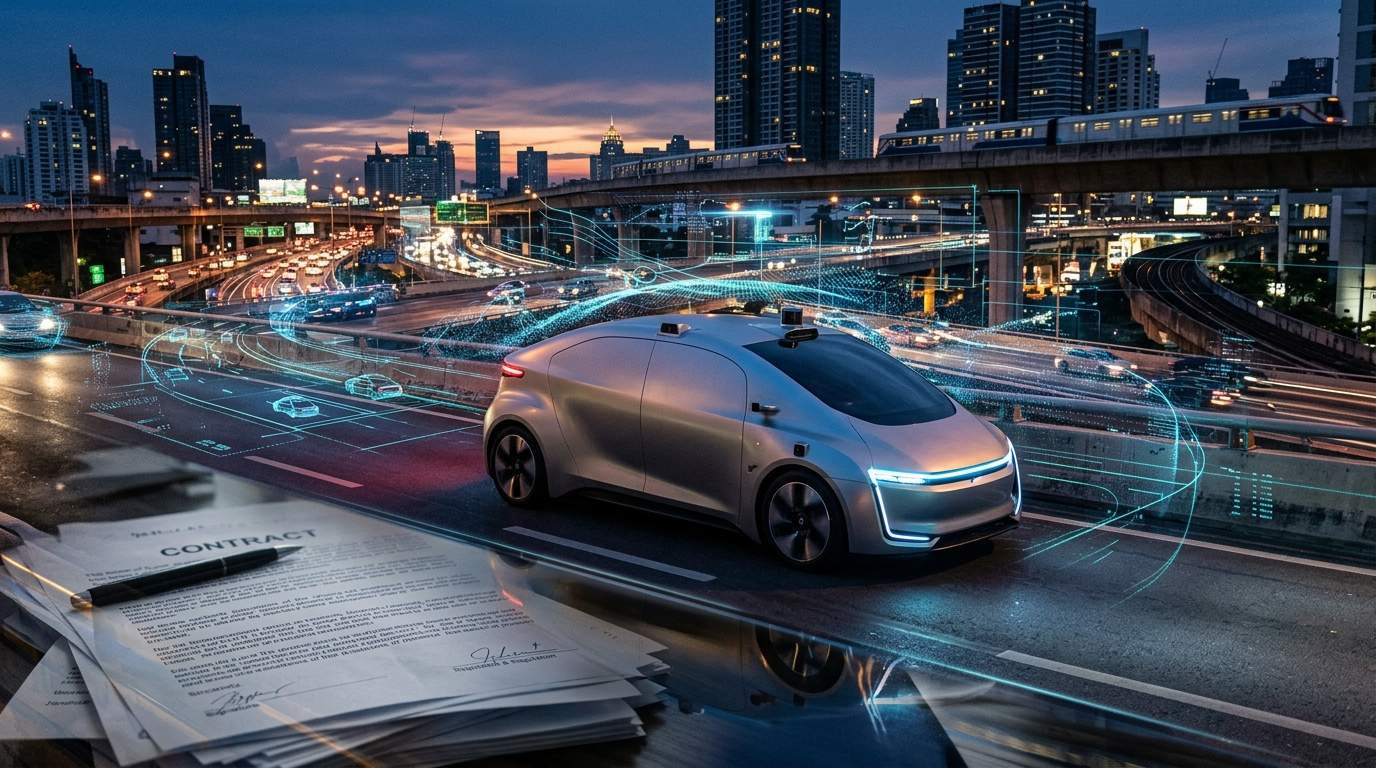
The challenge intensifies because these aren't simple software bugs; they represent fundamental limitations in how even the most robust AI models perceive and reason about the world. While engineers strive for "functional safety" through rigorous testing and redundancy, the sheer combinatorial complexity of real-world variables means that anticipating every single edge case is a computational and logistical impossibility. This inherent unpredictability directly undermines the narrative of absolute safety, forcing a re-evaluation of who bears the risk when the unforeseeable inevitably occurs.
The Limits of Perception: Sensor Fusion and Environmental Anomalies
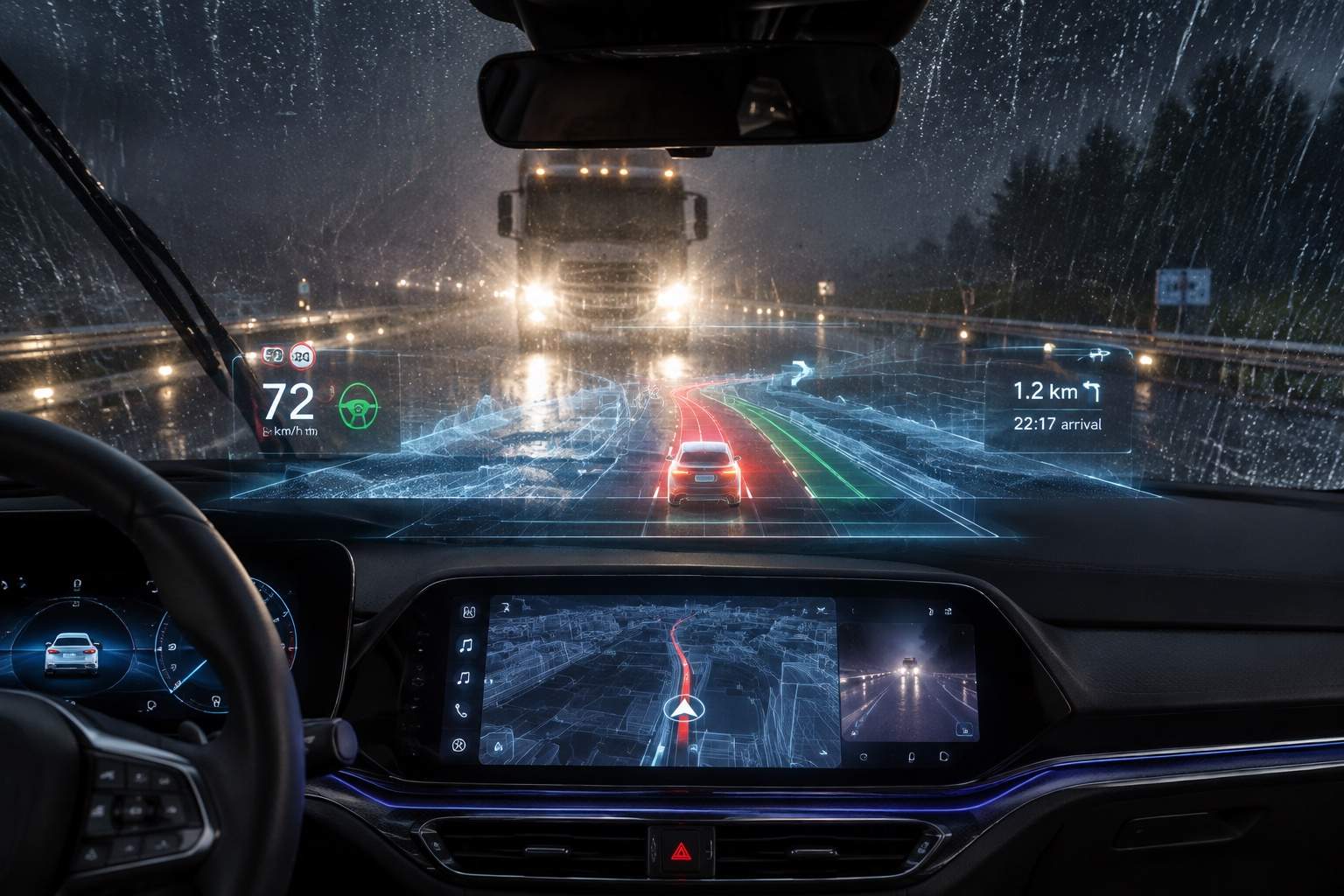
At the heart of autonomous decision-making is sensor fusion—the process of combining data from various sensors like cameras, lidar, radar, and ultrasonic arrays to create a comprehensive environmental model. This system is designed to provide robust perception, even if one sensor is temporarily obscured. However, an "environmental anomaly" could be a fleeting glare that blinds cameras, a peculiar radar reflection from an unusual object, or a combination of fog and specific lighting that distorts lidar readings in an unprecedented way. While V2X (Vehicle-to-Everything) communication promises to augment this perception by sharing data with other vehicles and infrastructure, its widespread deployment is still nascent, and it cannot cover truly novel, localized anomalies that occur in isolation. When multiple sensors are confused simultaneously by an unusual environmental interaction, the vehicle’s perception system can generate an inaccurate model of reality, leading to potentially dangerous and unpredictable actions.
The Shifting Burden: Autonomous Vehicle Liability and the Individual
The current legal frameworks, largely designed for human-driven vehicles, are struggling to keep pace with the rapid advancement of Level 4/5 autonomy. In an incident involving an autonomous vehicle, the complex interplay of proprietary software, integrated hardware components, and environmental factors makes it extraordinarily difficult for an average citizen to pinpoint responsibility. Is it the vehicle manufacturer, the software provider, the sensor supplier, or the remote operator who briefly intervened? This legal ambiguity inadvertently creates a gaping liability vacuum, effectively shifting the financial and emotional burden of technological failure onto the individual.
Victims are frequently forced into protracted legal battles against well-resourced corporations, who can leverage the sheer technical complexity of their systems and the "unforeseeable" nature of edge cases to deflect full liability. This often challenges the very premise of shared responsibility and equitable risk distribution in an automated future. The current dynamic fosters a profound asymmetry of interests: tech giants and automakers stand to gain immense profits, while ordinary citizens bear disproportionate risk.
Untangling the Code: Assigning Responsibility in a Digital Labyrinth
When an autonomous vehicle is involved in an accident, deciphering the precise cause is akin to navigating a digital labyrinth. Unlike human-driven accidents where factors like driver intent, reaction time, and road conditions are relatively straightforward to assess, AV incidents involve a deep dive into logs, sensor data, algorithm behavior, and software updates. Proprietary software often means that internal workings are black boxes to external investigators, and even when data is made available, interpreting the millions of data points and lines of code requires specialized expertise that few individuals or even small legal firms possess. This technical opaqueness makes it an uphill battle for victims to gather sufficient evidence and definitively prove negligence or fault against the various sophisticated entities involved in creating and deploying the AV technology.
Beyond the Algorithms: Ethical Dilemmas in AI Transport
The challenges of autonomous vehicle liability extend beyond technical and legal frameworks; they delve deeply into fundamental questions of AI ethics. Who defines an "acceptable" level of risk for a technology that promises zero accidents? Is it ethically justifiable for the industry to push for widespread deployment when the mechanisms for victim compensation and accountability remain ill-defined and disadvantageous to the public? The prevailing narrative often emphasizes the aggregate safety benefits—fewer overall accidents—but frequently glosses over the individual tragedies and the profound injustice when an individual becomes an "edge case" statistic. This raises a critical ethical question: are we prioritizing technological progress and corporate profit over the equitable protection of human lives and well-being?
Re-framing Accountability: Towards a Balanced Regulatory Framework
To truly harness the transformative potential of Level 5 autonomy, we must urgently develop robust and balanced regulatory frameworks that address the current liability vacuum. This requires a multi-faceted approach: establishing clear fault assignment protocols for autonomous vehicle incidents, mandating comprehensive liability insurance schemes that prioritize victim compensation, and fostering international regulatory harmonization to avoid a patchwork of conflicting laws. Transparency from manufacturers regarding system capabilities and limitations, along with public education, will also be crucial in rebuilding trust. Ultimately, the future success of autonomous transport hinges not just on technological prowess, but on our collective ability to create a system where innovation is paired with undeniable accountability, ensuring that the promise of a safer future doesn't come at the cost of individual justice.